
In the sheet metal processing industry, punch presses and laser cutting are the two mainstream blanking processes.The two are not in a substitutive relationship but a complementary one. Punch presses excel in large-scale and low-cost forming, while lasers excel in flexible customization, mold-free operation, and complex graphics.
1. The Difference In The Core Working Principle
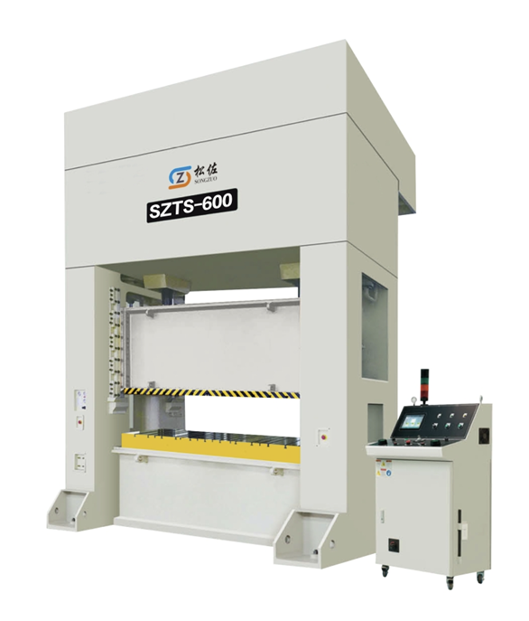
1.1. Punch Press Stamping
It relies on physical extrusion and shearing by molds, mechanical hard separation of plates, bending and stretching to form. It belongs to the contact cold working and molding forming process.
1.2. Laser Cutting
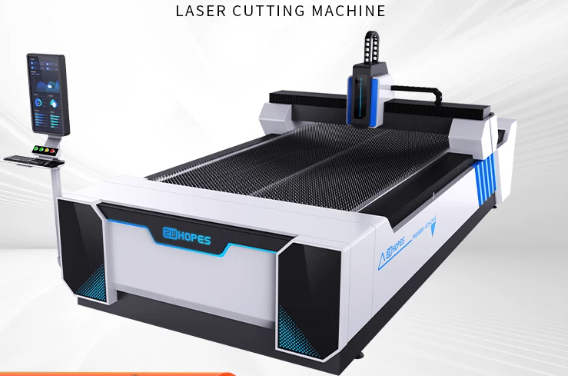
Relying on high-energy laser beams to melt and vaporize metals at high temperatures, the shape is cut through the optical path move.
2. Comparison of Process Capabilities (Maximum Core Difference)
2.1. The Advantageous Process of the Punch Press
Skilled in batch punching, blanking, bending, flanging, deep drawing, embossing and forming.
Not only it can cut the shape, but also it can directly produce three-dimensional structural components.
The processed section is flat, free of oxide layer and does not require slag removal.
2.2. The advantages of Laser Cutting Technology
Skilled in irregular shapes, shapes, complex curves and hollowed-out patterns.
It can only perform flat cutting and cannot be bent, stretched or formed.
It can only complete blanking and cannot perform secondary structure forming.
3. Precision and Finished Product Effect
3.1. Punch Press Stamping
The batch repeatability accuracy is extremely high, ±0.01mm.
The cross-section is vertical and smooth, free of burrs and scorched edges.
The product consistency is extremely strong, with no deviation in millions of pieces.
3.2. Laser Cutting
The single-cut accuracy is high, but the batch consistency is weaker than that of punch presses.
There is a micro-melting layer and a slightly oxidized black edge at the cut. Thick plates need to be ground a second time.
Small holes and dense holes are prone to heat and deformation.
4. Comparison of Production Efficiency
Small batch production, sample making, and a wide variety of new styles.
4.1. Laser Cutting Takes the Lead
No mold opening is required, and it can be cut immediately after drawing. The modification cost is zero. It is suitable for new product development, non-standard parts, and customized parts.
Large quantities of standardized parts.
4.2. The Punch Press Emerged Victorious
The punch press can produce one or more pieces per second, with a speed 10 to 30 times that of a laser, and its mass production efficiency far exceeds that of a laser.
5. Production Cost Comparison (Most Concerned by Factories)
5.1. Punch Press Stamping
The cost of stamping by a press
Molds need to be made in the early stage (one-time cost)
Mass production requires no consumables, consumes extremely low electricity and has extremely low labor costs
The price has been getting lower and lower, and the cost for bulk production of 100,000 or even millions has dropped sharply.
5.2. Laser Cutting Cost
No mold fee
The electricity cost per item, the cost of consumables and gas, and the wear and tear of the machine are high.
The more it is made, the more expensive it becomes. The larger the output, the higher the cost per piece remains.
6. Precise Selection of Applicable Scenarios
6.1. Give Priority to Punch Presses
Standard gaskets, terminals, brackets, and housing hardware.
Bulk orders and products with year-round repeat orders.
Structural components that need to be bent, stretched, flanged and embossed.
Parts with smooth cross-sections, no oxidation and high consistency are required
6.2. Give Priority to Laser Cutting
Non-standard irregular-shaped parts, advertising sheet metal, frame shells.
New product sampling, small-scale trial production, and frequent model updates.
Complex arcs, irregular contours, and single-piece customization.
7. The Ultimate Conclusion of the Industry
Mass production for profit relies on punch presses, while sample making and customization depend on lasers.
Lasers are responsible for “flexibility and diversity”, while punch presses are responsible for “efficiency and cost savings”.
The standard configuration for medium and large-sized sheet metal factories: laser prototyping + punch press mass production combination mode, is currently the most efficient production solution.