
PLC electrical control plus frequency converters form the core electrical supporting industrial chain for the automation upgrading of mechanical punch presses. Rather than standalone components, they constitute a complete industrial system covering chips, industrial control modules, program algorithms, variable-frequency drives, anti-interference solutions and complete-set integration. Traditional outdated punch presses adopt power-frequency constant-speed operation and relay logic control, featuring high failure rates, insufficient precision and lack of fault self-diagnosis functions. The new generation of intelligent mechanical punch presses universally adopts the combined solution of PLC programmable controller + heavy-duty vector frequency converter, realizing intelligent speed regulation, logic closed-loop control and visualized operation & maintenance.
At present, the electrical control industry for punch presses stands at a critical phase of full domestic substitution against imported products. The overseas high-end market remains dominated by Siemens, Mitsubishi and ABB. Meanwhile, leading domestic industrial control brands have achieved dedicated adaptation for stamping equipment, boasting prominent advantages in cost performance, delivery lead time and customized development.
This article delivers a comprehensive analysis on the supporting industry of electrical control & frequency conversion for punch presses, covering industrial landscape, upstream and downstream supporting facilities, product technology, quality control standards, fault logic, foreign trade selection criteria and the trend of domestic substitution.
1. Core Architecture and Functions of Punch Press PLC Electrical Control System
Core Hardware Composition: The complete electrical control system consists of an industrial-grade PLC host, touch human-machine interface (HMI), IO signal module, relay module, limit switch, overload signal acquisition module, terminal block, voltage-stabilized power supply and anti-interference shielding components. It realizes full-equipment functions including signal acquisition, logical operation, action output and fault monitoring.
Exclusive Stamping Logic Program: The dedicated program for stamping machines integrates multiple control logics, including single-cycle operation, continuous operation, jog operation, inching operation, automatic return, overload locking, emergency stop self-locking and stroke protection. Differing from general assembly-line PLC programs, it adapts to working conditions of high-frequency stamping start-stop, instantaneous load impact and frequent commutation.
Signal Closed-Loop Control: The interlocking clutch, overload oil pump, limit switch and safety light curtain form a closed-loop interlock system. Once any protection signal is triggered, the equipment power is cut off immediately, eliminating safety accidents such as mechanical misoperation, collision and continuous impact.
Fault Self-Diagnosis System: It automatically identifies overload, overtravel, frequency conversion faults, signal open circuits and voltage abnormalities. The system pops up real-time error prompts and locks equipment operation permissions, enabling overseas customers to troubleshoot and maintain rapidly and reducing after-sales communication costs.
2. Matching Principle and Adaptation Logic of Dedicated Frequency Converters for Punch Presses
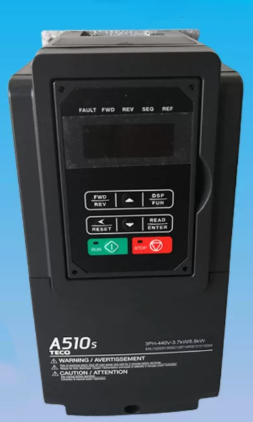
Core Function of Variable Frequency Speed Regulation: The frequency converter replaces the traditional industrial-frequency fixed-speed mode, enabling stepless adjustment of the slider stroke speed and stamping rhythm of the punch press. It adapts to multiple application scenarios, including high-speed stamping of thin workpieces, low-speed high-pressure pressing of thick workpieces, and low-speed forming of precision parts, improving product yield and equipment adaptability.
Heavy-Load Adaptation Selection Criteria: Punch presses are variable-load impact-type equipment, so heavy-duty vector frequency converters must be adopted. It is strictly prohibited to substitute general-purpose light-load frequency converters. Light-load frequency converters feature poor impact resistance. Abrupt load variations during stamping may easily trigger overload, frequency hopping, shutdown and module burnout.
Torque and Voltage Stabilization Compatibility: The dedicated frequency converter delivers high-torque output at low speeds, ensuring no power weakness or stalling during low-speed stamping. Equipped with a built-in voltage adaptive module, it accommodates unstable voltage and frequency fluctuations of overseas power grids and prevents operational abnormalities caused by voltage drift.
Flexible Acceleration and Deceleration Control: Customizable acceleration and deceleration time enables flexible buffering during start and stop, reduces mechanical impact, body vibration and gear wear, and significantly prolongs the service life of core components such as connecting rods, worm wheels and friction plates.
3. Assembly Process and Anti-Interference Quality Control of Electronic Control Systems
Strong and Weak Current Separate Wiring: Power lines and signal lines are arranged in layers with shielding and isolation measures to prevent signal disorder, false triggering and parameter drift caused by high-frequency frequency conversion interference. This is an essential process for high-end foreign trade punch presses.
Standardized Shielding Grounding: The whole machine adopts single-point grounding with compliant shielding layer crimping. It eliminates static interference and frequency conversion harmonic interference, adapting to industrial environments with humidity, dust and long-term continuous operation.
Program Encryption and Parameter Locking: Foreign trade models adopt exclusive program encryption and lock core stamping parameters. This prevents equipment failures caused by arbitrary on-site parameter tampering and protects the equipment’s core control logic.
High and Low Temperature Aging Test: The whole machine undergoes 72-hour continuous power-on aging. By simulating high-frequency start-stop, variable-frequency speed regulation switching and load fluctuations, it screens latent electrical faults including system freeze, error alerts and signal loss.
4. Common Causes and Solutions of Electric Control Frequency Conversion Faults
Unstable Rotation Speed and Fluctuating Stamping Speed: This fault is caused by insufficient torque of general-purpose frequency converters, power grid fluctuations and signal interference. The problem can be resolved by replacing the device with a heavy-duty vector frequency converter and implementing standardized wiring procedures.
Frequent Frequency Conversion Error Reports and Overload Alarms: This issue arises from undersized frequency converter capacity, insufficient anti-shock redundancy, and mismatched acceleration and deceleration parameters.
Continuous Overshoot Out-of-Control and Logical Disorder: This fault is caused by missing interlock protection in the PLC program, signal line crosstalk and unimplemented shielding processes.
Automatic Parameter Loss and Program Disorder: This fault results from insufficient power supply voltage regulation, poor grounding and low-quality industrial control accessories.
5. Pitfall Avoidance Guide for Foreign Trade Procurement of Electric Control Accessories
Rejection of General Civilian Frequency Conversion Solutions: Civilian light-load frequency converters feature no impact resistance redundancy and cannot adapt to the instantaneous heavy load during stamping processes, resulting in an extremely high failure rate. Low-end civilian configurations are strictly prohibited for substitution on foreign trade models.
Identification of Dedicated PLC Programs for Presses: General automation programs lack stamping interlocks, overload linkages and safety protection logics, which pose significant potential safety hazards.
Priority Configuration of Fault Self-Diagnosis System: It supports visual error reporting and code traceability, greatly lowering the difficulty of overseas after-sales maintenance.
6. Sound Industrial Ecosystem and Complete Upstream & Downstream Supporting System for Frequency Converters of Punch Press Electric Control
Upstream Core Raw Materials: Mainly including industrial control chips, power semiconductor modules, capacitors and resistors, shielded wiring harnesses, insulation boards and MCU microprocessors. In the early stage, core chips and power modules for high-end punch press electronic control were highly dependent on imports. In recent years, domestic power semiconductors and analog chips have achieved rapid breakthroughs, greatly cutting the cost of electronic control solutions, stabilizing supply chain delivery capacity, and preventing risks such as overseas supply disruptions, price surges and delivery delays.
Upstream Core Raw Materials: Mainly industrial control chips, power semiconductor modules, capacitors, resistors, shielded wiring harnesses, insulation boards and MCU microprocessors. In the early phase, core chips and power modules for high-end punch press electronic control relied heavily on imports. In recent years, domestic power semiconductors and analog chips have achieved rapid technological breakthroughs. This substantially cuts the costs of industrial control solutions, stabilizes supply chain delivery capacity, and mitigates risks including overseas supply disruptions, price hikes and delivery delays.
Downstream Application Market: It covers general mechanical punch presses, precision pneumatic punch presses, high-speed continuous stamping equipment and automated stamping production lines, serving full-range stamping scenarios including hardware, auto parts, home appliances, electronic precision components and new energy industries. Overseas markets impose higher requirements on the safety, stability, grid fluctuation resistance and fault traceability of electronic control systems, driving the continuous iteration and upgrading of the domestic electronic control industry.
7. Industry Trend: Logic of Domestic Substitution in the Electric Control & Frequency Conversion Industry
In the past, the electronic control systems for high-end punch presses were monopolized by European, American and Japanese brands, featuring high pricing, long lead times, difficult customization and slow after-sales services. Currently, leading domestic industrial control enterprises have fully benchmarked imported standards in heavy-duty vector control, frequency conversion anti-interference technology, stamping-dedicated programs, grid self-adaptation and 72-hour aging quality control. Targeting the punch press workshop’s operating conditions including impact loads, high-frequency start-stop cycles and complex electromagnetic environments, domestic dedicated electronic control solutions are better adapted to actual terminal application scenarios. Supporting rapid customization, program encryption and remote operation and maintenance, these solutions have become crucial supporting facilities for foreign trade punch presses to reduce costs, improve quality and strengthen core competitiveness. The future automation and intelligent upgrading of punch presses will further drive the domestic popularization of PLCs, frequency converters, intelligent sensors and closed-loop control systems.