
Safety light curtains (photoelectric protectors) serve as the last line of defense for personnel safety on mechanical stamping equipment, and represent core safety components subject to mandatory compliance requirements across the global stamping industry. They form a key segment within the mechanical safety automation industrial chain.
Unlike general mechanical components, safety light curtains are directly linked to safe equipment operation, factory safety inspection certification, and overseas market access qualifications. They are standard and indispensable components for export bound orders destined for Europe, America, Southeast Asia, the Middle East, Australia and other regions.
Conventional punch presses, without photoelectric protection, rely purely on operators’ practical experience, which carries a high risk of occupational injuries: hands accidentally entering the die zone, unintended contact with workpieces, and hazards induced by tooling interference. Modern export oriented intelligent punch presses are universally fitted with industrial grade safety light curtains, building a closed loop safety system characterized by full automatic infrared protection, millisecond range shutdown response, and fault self locking.
Currently, the global safety light curtain market exhibits the following landscape: German and Japanese suppliers dominate the high end segment, local Chinese manufacturers are achieving comprehensive technological catch up, while mid to low end capacity faces fierce competition. China’s domestic light curtain sector has accomplished technological iteration and process upgrading, evolving from basic assembly and OEM production into a complete industrial chain covering independent R&D, optical path calibration, EMC (electromagnetic compatibility) testing, and condition specific application adaptation.
This paper conducts a comprehensive analysis of the punch press matched safety light curtain supporting industry, covering operating principles, structural processes, pre delivery quality control, common potential hazards, foreign trade oriented selection criteria, upstream downstream industrial patterns, and the development trend of domestic brand substitution.
1. Core Working Principle and Protection Logic of Safety Light Curtains for Punch Presses
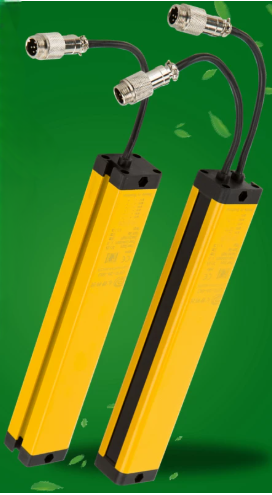
Principle of Infrared Light Curtain Formation: A safety light curtain mainly consists of a transmitter terminal, a receiver terminal and a signal controller. The transmitter and receiver are installed in a symmetrical and equidistant arrangement to form a high-density, parallel infrared beam matrix. This structure fully covers the dangerous operating area of the punch press die without detection blind spots, forming an invisible and fully enclosed safety protection light barrier.
Millisecond-level Shutdown Protection Mechanism: The safety light curtain is equipped with a high-speed signal recognition chip. When a human hand, workpiece or tooling obstructs any infrared beam, the system instantly cuts off the punch press clutch control signal and locks the slider’s downward stroke. The equipment achieves immediate emergency braking, fundamentally eliminating mechanical safety hazards such as hand crushing, workpiece pressing and die collision at the physical protection level.
Intelligent Reset Production Logic: After the obstacle is completely removed from the protected area, the light curtain automatically unlocks the control signal, and the equipment resumes normal stamping operation without manual restart or reset. This design ensures operational safety while maximizing stamping production efficiency, making it highly adaptable to continuous automated production conditions.
Complete Machine Safety Interlock Closed-Loop Mechanism: The light curtain system achieves deep interconnection and interlocking with the punch press’s PLC electrical control system, emergency stop system, braking system and overload protection system, and is equipped with a fault self-locking function. In case of light curtain circuit abnormalities, infrared beam deviation or electrical faults, the system directly prohibits equipment startup. This thoroughly eliminates safety blind spots caused by light curtain failure and fully complies with international industrial safety standards.
2.Structural Materials and Precision Production Processes of Special Safety Light Curtains for Punch Presses
High-Strength Explosion-Proof Housing: Industrial-grade safety light curtains adopt integrally formed aluminum alloy housings, which differ from civil-grade plastic housings. Featuring impact resistance, anti-deformation, dustproof, explosion-proof and oil-resistant properties, the housings can adapt to long-term harsh working conditions in stamping workshops, including vibration, dust, oil pollution and fluctuating temperatures, without deformation or cracking.
Anti-Interference Optical Lens: The light curtain is equipped with high-transmittance filter optical lenses and built-in stray light filtering algorithms. It can effectively suppress external interference sources including workshop strong light, direct sunlight, flickering lamps and equipment reflected light, and eliminate common defects of ordinary light curtains, such as accidental false shutdown, sensitivity drift and identification failure.
High-Speed Industrial-Grade Core Chip: The safety light curtain adopts a dedicated high-speed signal processing core chip, with an overall system response time of less than 10 ms, far exceeding the performance of ordinary civilian photoelectric switches and low-end light curtains. It perfectly matches the high-speed continuous stamping rhythm of punch press equipment, realizing instant emergency shutdown upon obstruction without response delay, protection omission or lagging failure.
Damage-Resistant Shielded Wiring Harnesses and Aviation Connectors: The light curtain is fitted with waterproof, oil-resistant shielded wiring harnesses and aviation plug connectors that feature excellent resistance to tension, oxidation, loosening and vibration. These components adapt to the long-term high-frequency vibration operating conditions of punch presses and avoid signal interruption and protection failure caused by circuit looseness.
3.Export-Grade Precision Assembly and Comprehensive Factory Quality Control Standards
Precision Optical Path Calibration for Each Beam: Before delivery, every infrared beam undergoes independent optical alignment calibration. This ensures uniform beam spacing and consistent parallelism, achieving full-area coverage without blind zones. The process effectively eliminates typical manufacturing defects of low-end light curtains, such as beam offset, partial protection failure and corner detection blind spots.
Multi Scenario Anti Interference Testing: Complex field conditions are simulated during testing, including variable frequency electromagnetic interference, harmonic interference generated by high frequency equipment, strong light exposure, and mutual interference among multiple parallel operated devices. Repeated tests are performed to verify the recognition stability of the light curtain, ensuring the system responds only to physical obstructions and avoids false triggering induced by environmental signals.
High-Low Temperature Weather Resistance Test: The light curtain shall pass high temperature humidity, low temperature dry and alternating temperature difference tests. It is qualified to adapt to climatic conditions of overseas tropical, temperate and frigid regions, and prevents circuit oxidation, sensitivity degradation and erroneous equipment failures triggered by environmental variations.
Hundreds of Thousands Cycle Fatigue Life Test: Continuous fatigue tests covering shielding, resetting and start stop cycles are carried out to verify chip operating stability, circuit durability and mechanical structure reliability. This guarantees no response lag, malfunction or performance degradation under long term high frequency operating conditions.
IP65 Industrial Protection Grade Certification: The complete machine complies with IP65 industrial protection standards for dustproof, waterproof and oilproof performance, and is applicable to high-intensity stamping production scenarios. It effectively resists workshop dust and oil splashes, delivering stable adaptability to harsh industrial production environments.
4.Common Fatal Hazards and Fault Causes of Inferior Safety Light Curtains
Response Delay and Protection Failure: Low-end inferior light curtains adopt civilian low-speed chips with slow response performance. Under high-speed stamping operating conditions, such devices fail to trigger an emergency shutdown in a timely manner, greatly increasing the risk of occupational injuries. This constitutes the most critical safety hazard of low-grade punch press equipment.
Sparse Beams and Protection Blind Spots: Inferior light curtains lack precise optical path calibration technology, resulting in uneven beam arrangement, corner light leakage and failure to identify local obstructions. These inherent safety loopholes lead to incomplete protection coverage, making the equipment unable to pass safety audits and certification requirements for overseas factories.
Frequent False Shutdowns and Production Disruptions: Without effective electromagnetic anti interference design, inferior light curtains may trigger unprovoked shutdowns under interference from frequency converters, motors and other high frequency equipment. This situation interrupts normal production and severely impairs stamping output and production continuity.
Poor Environmental Adaptability and Premature Scrapping: Equipped with plastic housings and ordinary circuits without weather resistant treatment, inferior light curtains are susceptible to oxidation and corrosion under high temperature and humid conditions. Circuit dampness will trigger malfunctions, error alarms or complete protection failure after only 1-3 months of operation.
5.Core Selection Criteria and Pitfall Avoidance Guide for Foreign Trade Procurement of Safety Light Curtains
Strict Prohibition on Substitution with Civilian Photoelectric Products: Ordinary access-control light curtains and civilian photoelectric switches lack heavy-load anti-interference performance, industrial protection capabilities and safety interlock logic. Such products are strictly prohibited from being installed on stamping equipment, as they entail extremely high operational safety risks.
On-Demand Matching of Protection Specifications: According to the press tonnage, die opening height and worktable dimensions, the protection height, beam spacing and response speed of the light curtain shall be precisely matched. This avoids insufficient safety protection or resource waste caused by mismatched specifications.
Priority Selection of Fault Self-Locking Function: Export-grade punch presses must adopt light curtains with a fault self-locking function. Once the light curtain fails or malfunctions, the system automatically locks equipment operation. This eliminates the high-risk vulnerability of continued machine operation under protection failure and complies with overseas mandatory safety regulations.
Verification of Anti-Frequency Conversion Interference Technology: Stamping workshops are densely equipped with frequency-conversion devices, forming a complex and volatile electromagnetic environment. It is mandatory to adopt light curtains with professional anti-interference capabilities to prevent frequent false shutdowns during operation, thereby ensuring stable and continuous mass production.
6.Complete Industrial Chain Pattern of Upstream and Downstream Safety Light Curtain Industry
Upstream Core Raw Materials: The upstream industrial chain covers infrared transmitting and receiving chips, high-speed MCU processing chips, optical filter lenses, aluminum alloy profiles, waterproof shielded wiring harnesses, industrial circuit boards, voltage stabilization modules, and aviation connectors. In the early stage of the industry, high-end optical chips and high-speed processing chips were heavily reliant on imported supplies. At present, China’s optical processing, semiconductor chip and circuit integration industries have achieved mature development. Core components have realized independent controllability, thoroughly breaking the technical bottleneck of high-end supporting accessories. This advancement substantially improves the cost performance and delivery stability of domestic safety light curtains.
Midstream Production and Manufacturing System: Current domestic light curtain manufacturers are classified into three tiers. The first tier consists of low-end assembly original equipment manufacturers, who merely conduct simple component assembly without professional optical calibration, standardized testing or independent R&D capabilities. The second tier refers to mid-range standardized mass-production manufacturers with complete assembly and quality control procedures, capable of delivering stable and standard-compliant products. As a high-end customized R&D manufacturer, we independently optimize dedicated algorithms targeting extreme working conditions of punch presses, including variable-frequency interference, high-frequency vibration and severe oil pollution, making our products fully applicable to high-end export equipment. Leading manufacturers like us have built a comprehensive manufacturing system covering optical path R&D, chip adaptation, structural optimization, precision calibration and full-item performance testing.
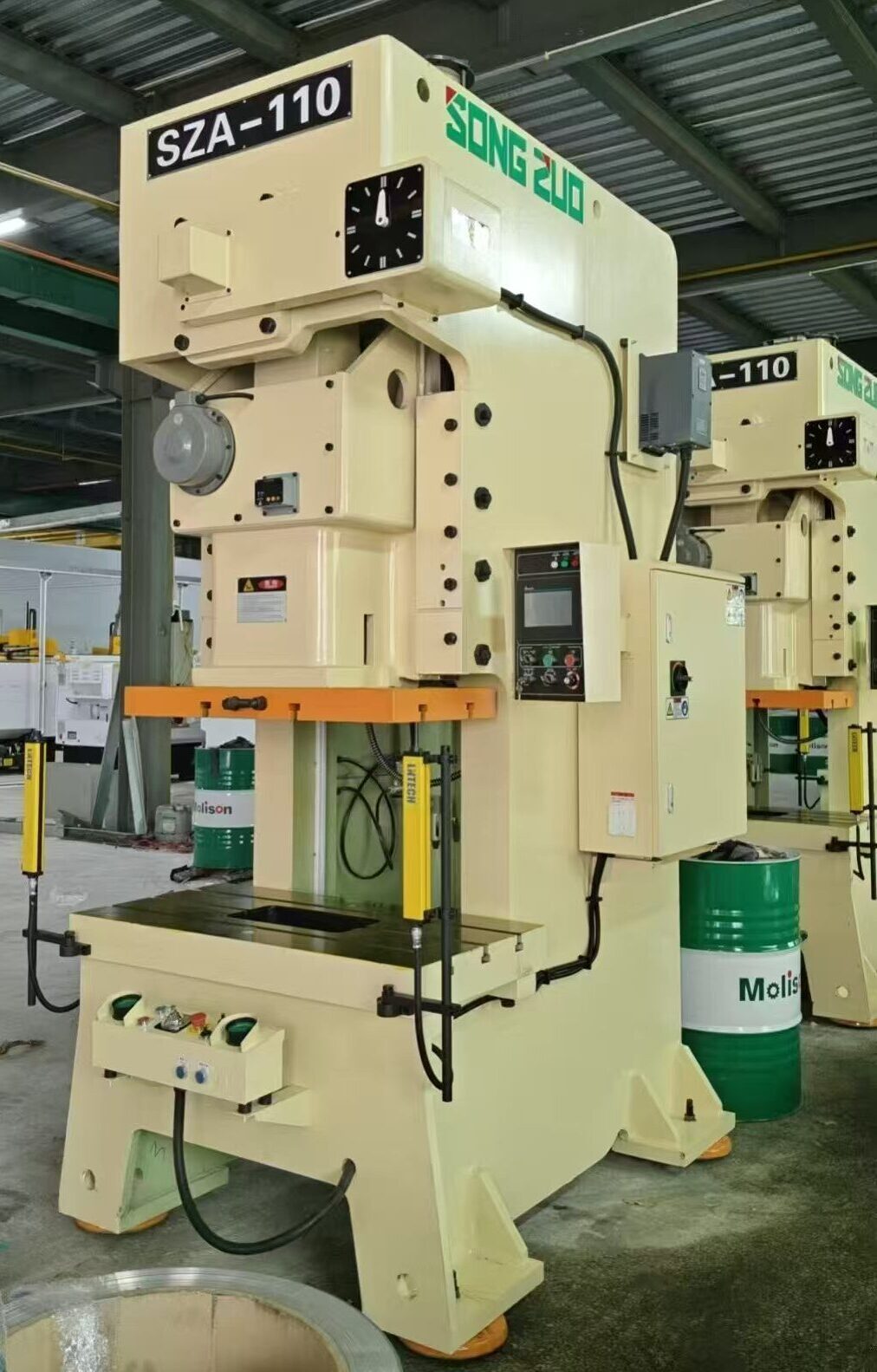
Downstream End-User Application Market: Safety light curtains are principally compatible with mechanical punch presses, pneumatic punch presses, high-speed stamping equipment and automated stamping production lines. They are widely adopted in hardware manufacturing, automotive components, home appliance forming, electronic precision parts, new energy sheet metal processing and other industries. Europe, America and Australia enforce stringent safety inspection standards, mandating industrial grade light curtains and complete interlock logic. Safety regulations across Southeast Asia, the Middle East and South America are continuously upgraded, and the market penetration rate of safety light curtains keeps rising year-on-year, representing a huge overseas incremental market.
7. Industry Trends: Iteration and Substitution Advantages of Domestic Safety Light Curtain Industry
The global high-end safety light curtain market has long been monopolized by German and Japanese brands. Although imported light curtains deliver stable performance, they suffer from prominent drawbacks including high pricing, long lead times, lagging after-sales support and poor working condition adaptability, which fail to meet the cost-performance requirements of domestic and overseas small and medium-sized enterprises.
Currently, domestic high-end light curtains have reached the technical benchmarks of imported brands in core indicators, including optical path calibration accuracy, anti-interference capability, response speed, industrial protection grade and fatigue operational stability. Furthermore, domestic products are specially optimized for typical stamping workshop scenarios, achieving superior adaptability to complex industrial environments with variable-frequency electromagnetic interference, intense ambient light, oil contamination and mechanical vibration. They also support rapid specification customization, responsive after-sales service and large-scale batch delivery.
With the continuous improvement of global industrial safety regulations, safety protective accessories for stamping equipment will become increasingly indispensable in industrial production. Leveraging outstanding cost performance, robust working condition adaptability and efficient delivery capacity, domestic safety light curtains will further accelerate the substitution of imported products and dominate the global medium and high-end stamping safety protection market.