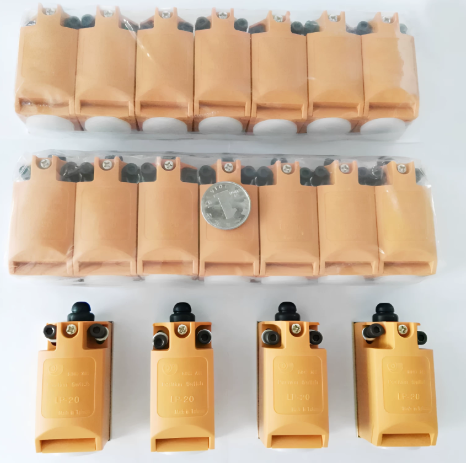
Microswitches and overload induction switches serve as the “safety nerves” of the punch press electrical control system and act as core components for equipment precision protection and signal transmission. They are mainly responsible for slider stroke limiting, overload protection, clutch signal feedback, emergency stop cutoff, and stamping position sensing, directly controlling the start-stop logic, operating stroke and overall safety of the punch press.
Common punch press faults including stroke runaway, over-stroke collision, failed overload protection, signal disorder, continuous stamping misoperation, start-stop failure and electrical alarm errors are mostly caused by switch contact oxidation, spring piece fatigue, sensing accuracy deviation, sealing failure and inferior material quality. Such defective issues account for 90% of equipment malfunctions in actual operation.
In foreign trade procurement, replacing industrial-grade dedicated switches with ordinary civilian or non-standard low-quality alternatives frequently leads to equipment safety accidents and after-sales maintenance problems. This article systematically analyzes the structural materials, production processes, precision quality control standards, potential failure risks, and key procurement pitfall avoidance points for punch press-specific microswitches and overload induction switches.
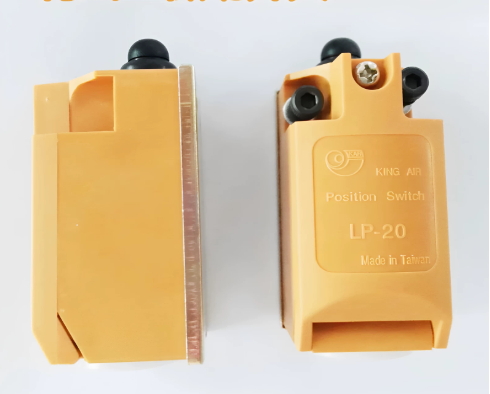
1. Classification and Core Functions of Punch Press Special Switches
Travel Microswitch: Designed for precise mechanical actuation, it controls the upper limit, lower limit and return limit of the punch press slider. It prevents overtravel operation, die collision and rigid impact on the machine frame, ensuring standardized execution of the stamping stroke.
Overload Sensing Switch: Used together with the overload hydraulic pump and protection device of the punch press. It rapidly detects abnormal pressure when the equipment encounters overload, material jamming or stalling, cuts off power instantly and activates protection to prevent damage to the crankshaft, connecting rod and die.
Clutch Signal Switch: It undertakes real-time feedback of clutch opening and closing signals, accurately matching the transmission start-stop rhythm. This effectively solves common punch press problems such as continuous stamping, transmission slippage, start-stop asynchronization and stamping accuracy deviation.
Emergency Stop Safety Switch: It rapidly cuts off the control circuit under emergency conditions and locks the equipment operating status, serving as a core safety protection component for operators and the entire machine system.
2. Material selection for core components (Precision and lifespan Foundation)
Contact Material: Industrial-grade switches for punch presses consistently adopt silver alloy contacts (silver cadmium oxide, silver-nickel alloy). They feature outstanding electrical conductivity, high temperature resistance and arc erosion resistance, and resist oxidation and blackening. Such contacts avoid the drawbacks of easy erosion and poor contact encountered with copper contacts and inferior alloy contacts, making them suitable for high-frequency switching operating conditions.
Spring Pieces and Transmission Components: Precision spring pieces made of high-elasticity manganese steel and stainless steel are adopted and subjected to quenching and tempering treatment. They feature stable elasticity and excellent fatigue resistance, and will not deform or loosen after millions of reciprocating movements, maintaining constant actuation force and sensing accuracy.
Housing Material: Constructed from high-strength flame-retardant PA66 engineering plastic. The material delivers fire resistance, impact resistance, oil resistance and outstanding insulating performance. It withstands dusty, oily and humid workshop environments and resists ageing, cracking, electric leakage and dielectric breakdown.
Precise Contact Alignment Calibration: Dual calibration of contact make-break gap, actuation stroke and reset force is carried out manually and via dedicated equipment, ensuring accurate actuation, rapid reset and consistent signal output in every operation.
Sealed Waterproof Encapsulation: Fully enclosed press-fit encapsulation is adopted. The sealing ring is tightly compressed and bonded without gaps or loosening, delivering industrial three-proof performance including dust resistance, water resistance and oil resistance.
Power-on Aging Pre-test: Finished products are subjected to tens of thousands of power-on and power-off aging tests to screen out initial defective units, stabilize electrical performance and prevent early failures after installation.
3. Complete Set of Industrial-Grade Factory Inspection Standards
On-off Accuracy Test: Precisely inspect the actuation stroke, reset stroke and operating force to guarantee sensitive sensing, zero delay and error-free triggering, satisfying the precise control requirements of punch presses.
Conductivity Performance Testing: The contact on-resistance and current-carrying capacity are measured to avoid issues including excessive resistance, heat generation, poor contact and signal drift
High-Voltage Insulation Testing: Withstand voltage insulation inspection is implemented to identify potential risks of electric leakage and dielectric breakdown, ensuring electrical safety in damp and oily workshop environments.
High-Frequency Fatigue Life Test: It simulates the long-term high-frequency switching conditions of punch presses and carries out hundreds of thousands of reciprocating tests to verify the fatigue resistance of spring pieces and contacts.
Three-Proof Sealing Test: Immersion and spray tests for water resistance, dust resistance and oil resistance are performed, verifying adaptability to complex industrial working conditions and humid marine environments.
High and Low Temperature Weather Resistance Test: Alternating temperature difference environments are simulated to verify the performance stability of switches under high-temperature workshop conditions and low-temperature overseas operating environments.
4. Common Failure Forms and Root Causes
Signal Failure and Poor Contact: Long-term arc burning leads to contact oxidation, erosion and carbon deposition. This defect mainly occurs in low-grade alloy contacts without anti-oxidation treatment.
Trigger Jamming and Slow Rebound: Internal dirt accumulation, fatigue deformation of spring pieces and excessive tolerance of transmission components result in delayed action and stroke deviation of the switch.
Overtravel and Limit Failure: Inaccurate calibration of actuation stroke and insufficient reset force fail to cut off the circuit in a timely manner, resulting in machine collision faults.
Leakage and Insulation Faults: Poor flame retardancy of the plastic housing, sealing failure, moisture absorption and water ingress will degrade insulation performance and cause circuit abnormalities.
Overload Protection Failure: Deviation in the accuracy of the overload sensor switch and shift of the actuation threshold prevent timely activation of protection upon equipment overload, which may damage core components.
5. Core Guide to Avoiding Pitfalls in Foreign Trade Procurement
Do Not Replace Industrial-Grade Switches with Civilian Switches: Civilian switches adopt low-quality contact materials and possess poor fatigue resistance. They cannot withstand the high-frequency operating conditions of punch presses and tend to suffer premature failures, which may trigger safety accidents.
Beware of Products Without Three-Proof Sealing: Switches lacking dustproof and waterproof structures are susceptible to malfunction once dust and oil contaminants intrude. Such products have an extremely high overseas after-sales repair rate.
Do Not Purchase Low-Cost Components Without Aging Tests: Switches that have not undergone power-on aging tests contain massive initial defects and exhibit extremely poor batch stability.
Ensure Selection of Dedicated and Compatible Models: The travel switch, overload switch threshold and travel parameters for punch presses are designed for dedicated matching. General non-standard components may suffer from inaccurate actuation and protection failure.