
The friction plate serves as the core braking and transmission component for punch press clutch and brake assemblies, recognized as the “brake heart” of a punch press. It directly governs punch press startup and shutdown, clutch power transmission, emergency braking and slider limiting.
Common high-frequency failures of punch presses in the market, including continuous uncontrolled stamping, ineffective braking, brake slipping, overheating and smoking, abnormal noise and vibration, clutch burnout and weak slipping torque, are closely associated with friction plate raw materials, molding process, curing level and friction coefficient stability.
Punch press friction plates fall into two main types: dry friction plates and wet friction plates. The two types differ completely in working conditions, materials, manufacturing processes and applicable scenarios. They are also components most prone to confusion, improper selection and misuse during foreign trade procurement, often resulting in batch product returns and after-sales disputes.
This chapter comprehensively analyzes the distinctions between dry and wet friction plates, covering manufacturing processes, quality control standards, failure triggers and key guidance for risk avoidance during foreign trade selection.
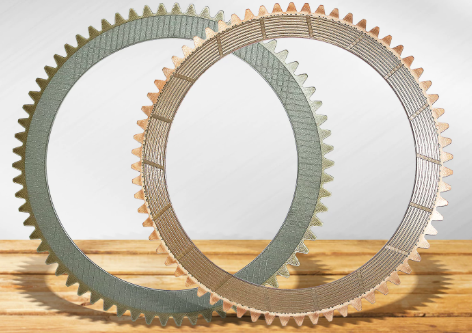
1. Core Differences and Applicable Working Conditions of Dry and Wet Friction Plates for Punch Presses
Dry Friction Plates: Dry friction plates operate in an oil-free dry environment and rely on air convection for heat dissipation. Featuring a high friction coefficient and fast response, they deliver highly sensitive braking performance. They are widely applied to standard mechanical punch presses and precision stamping equipment, supporting rapid clutching and accurate braking. However, they are not resistant to sustained high temperatures, and high-frequency continuous stamping easily causes thermal attenuation of braking performance.
Wet Friction Plates: Wet friction plates work fully immersed in hydraulic oil or gear oil. Circulating oil continuously provides heat dissipation and lubrication. They offer superior wear resistance, longer service life, lower operating noise and smoother braking. Suitable for high-speed punch presses, heavy-duty precision punch presses and automatic continuous stamping equipment, they support long-term high-frequency and full-load operation.
Core Procurement Misunderstandings: Dry and wet friction plates are not interchangeable. Replacing dry plates with wet plates leads to insufficient braking force and persistent slippage. The most common foreign trade selection error occurs when wet plates are installed in dry working conditions, resulting in rapid high-temperature carbonization and accelerated abrasive wear.
2. Quality Control of Core Raw Material Formula for Friction Plates (Foundation of Wear Resistance and Braking Performance)
High-performance friction base material: Standard industrial-grade friction plates adopt a resin-based composite formula blended with carbon fiber, mineral fiber, wear-resistant fillers and high-temperature resistant binders. Inferior asbestos and recycled powder materials are excluded. The material delivers high friction coefficient, high temperature resistance and anti-fade performance.
Steel core base plate material: Manufactured by stamping high-strength cold-rolled steel plates, the base plate boasts excellent flatness, deformation resistance and strong adhesion. Thin iron sheets and low-grade base plates are eliminated to avoid warping, delamination and cracking under high temperatures.
Quality control of bonding adhesive: High-temperature and weather-resistant bonding resin is applied. It features heat resistance and anti-aging property with stable anti-delamination performance. Capable of enduring frequent impacts and high-temperature operating conditions, it prevents separation and peeling between friction layer and steel plate.
Differentiated formula control: Dry formulas prioritize high friction coefficient and responsive braking performance. Wet formulas focus on oil resistance, immersion resistance, hydrolysis resistance and long-term wear resistance,
3. Complete Production and Forming Process for Friction Plates
Raw material mixing ratio: Wear-resistant powder, fibers and binders are precisely proportioned according to dry and wet operating conditions. High-speed stirring ensures homogeneous formula and consistent friction performance across every batch.
Steel plate pretreatment: Steel base plates are treated with sandblasting for rust removal and surface roughening to eliminate oxide layers and improve bonding adhesion, so as to avoid delamination and peeling from the source.
Hot-pressing integral forming: Adopting high-temperature and high-pressure molding technology with constant temperature & pressure pressing, the friction material is tightly bonded to the steel plate. The finished product features dense structure free of pores, removing defects including porosity, hollowing and slag inclusion.
High-temperature curing & setting: Staged gradient high-temperature curing fully solidifies the resin structure, stabilizes friction coefficient, improves high-temperature resistance and anti-aging property, and prevents thermal softening, slipping and functional failure in service.
Precision grinding surface treatment: Double-sided precision flat grinding guarantees smooth, flat friction surfaces with uniform thickness. It achieves 100% braking contact area and avoids uneven grinding, irregular braking, abnormal vibration and noise.
Hole machining & shaping: Positioning holes and mounting holes are precisely processed, and the overall flatness is calibrated to guarantee close fitting and even force distribution during assembly.
4. Core Quality Inspection and Performance Testing Standards Prior to Delivery
Friction coefficient detection: Dry and wet tests are carried out separately to measure the friction coefficient under rated working conditions, ensuring responsive braking without slipping or power attenuation, as well as stable parameters free of drift.
High-temperature fade resistance test: Continuous stamping high-temperature operating conditions are simulated to test friction stability at high temperatures and prevent issues including high-temperature softening, brake failure and thermal fade.
Oil immersion adaptation test (for wet-type only): Long-term oil immersion testing verifies the material’s oil resistance and hydrolysis resistance, ensuring no expansion or delamination for long-term service in oil bath environments.
Bonding strength test: Tensile tests are performed to verify the bonding strength between the friction layer and steel plate, and reduce risks of delamination and peeling.
100% inspection of flatness and thickness: Thickness tolerance and flatness of every piece are inspected one by one to guarantee batch consistency, avoiding uneven assembly clearance, brake jamming and vibration.
High-frequency fatigue life test: Tens of thousands of start-stop braking cycles are simulated to verify long-term wear resistance and braking stability for industrial high-frequency operating conditions.
5. Common Failure Causes and Countermeasures for Friction Plates
Brake slippage and creeping during continuous braking: Generally resulting from low friction coefficient, high-temperature thermal fade and oil contamination on the surface. Solution: Adopt genuine friction plates with high friction coefficient, remove oil stains regularly, and select suitable types according to working conditions.
Delamination and peeling: Mainly caused by insufficient steel plate pretreatment, inadequate hot-pressing curing and low-quality adhesives. Solution: Implement strict control over sandblasting and high-temperature curing processes.
High-temperature smoking, carbonization and burning of dry friction plates: Occurs when dry plates run under long-term high-frequency and heavy-load conditions with poor heat dissipation and insufficient high-temperature resistance of materials. Solution: Switch to wet friction plates for high-frequency working conditions to match equipment load.
Unilateral wear and braking vibration: Triggered by poor flatness, uneven thickness and incorrect installation of friction plates. Solution: Adopt precision surface grinding plus standardized assembly calibration.
Swelling failure of wet friction plates: Low-grade formulas lack oil immersion resistance. Long-term soaking leads to swelling, deformation and jamming. Solution: Use materials with dedicated oil-resistant formula for wet applications.
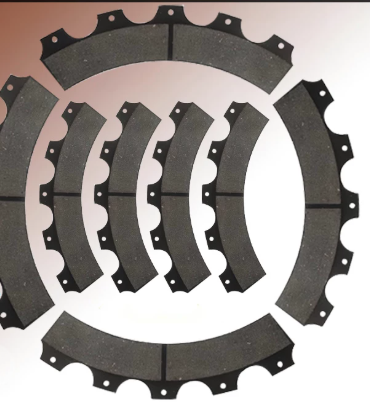
6. Key Pitfalls to Avoid in International Procurement
Mixing and interchange of dry and wet friction plates are strictly prohibited. Mismatched working conditions constitute the biggest hidden risk for after-sales service. Models must be selected precisely according to the structure of the press clutch.
Stay alert to low-priced friction plates made from recycled materials. Such products contain blended recycled powder and suffer from inadequate curing, severe short-term wear and thermal fade, which may easily cause equipment safety incidents.
Reject products without high-temperature curing treatment. Parts merely pressed at room temperature tend to soften and slip under heat, and are completely unsuitable for continuous industrial stamping.
Guarantee consistent parameters across the whole batch. Small manufacturers usually have disordered batch management and unstable formulas, leading to inconsistent braking performance between batches and impairing equipment precision and production safety.