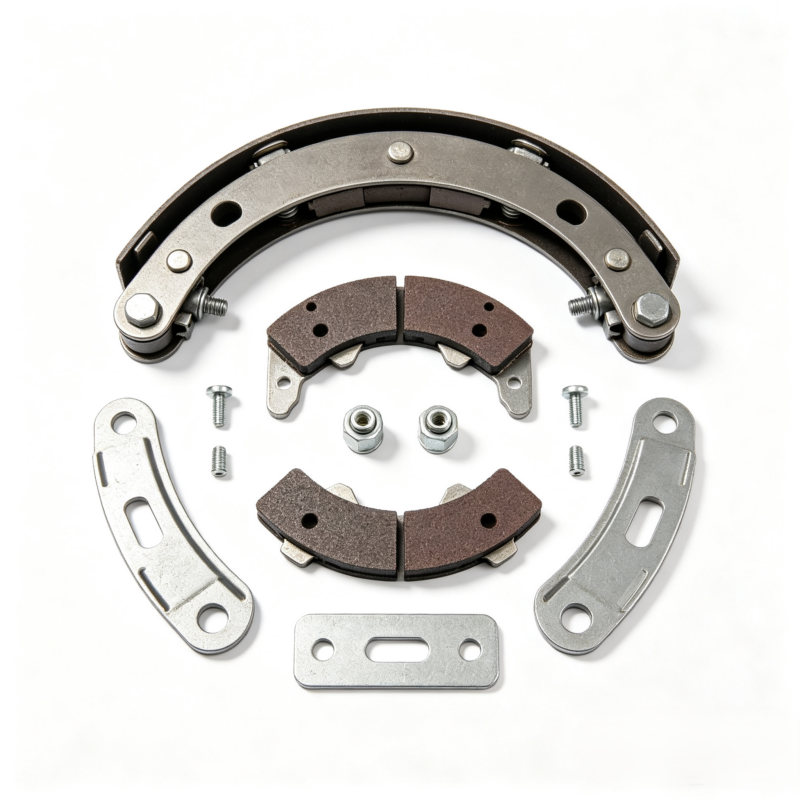
Brake belts and brake shoes are core braking components of old-fashioned mechanical punch presses and ordinary gear punch presses, and they are high-frequency wear parts. The most common pitfall for overseas purchasers is that they only focus on the price without considering the material density, sintering process, and wear-resistant formula. Poor-quality brake belts can cause brake slippage, brake delay, powder shedding and rapid wear, directly affecting stamping safety and production accuracy. This article elaborates on the raw materials, complete production processes, process differences, and key points to avoid pitfalls in foreign trade procurement of brake belts and brake shoes for punch presses.
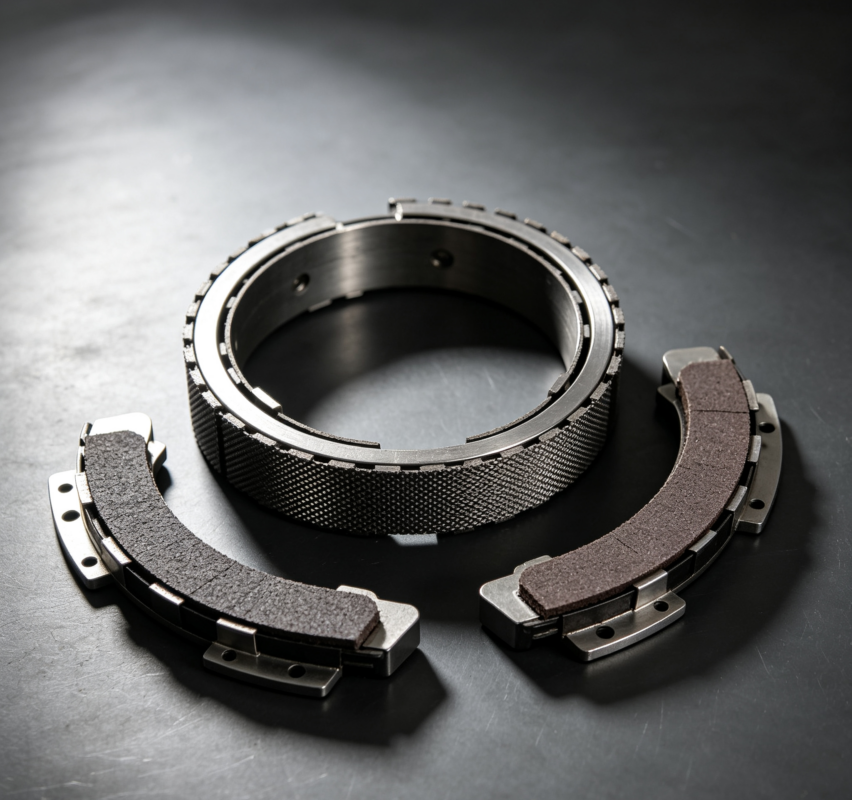
1. Core Raw Materials for Brake Belts/Shoes of Punch Presses (Quality Watershed)
The main friction base material: High-end products adopt asbestos-free copper-based and iron-based powder metallurgy materials, which have high density, high temperature resistance, stable friction coefficient, and are suitable for high-frequency braking conditions of punch presses. The mid-range regular model is made of composite fiber wear-resistant material, offering high cost performance and is suitable for small and medium-sized ordinary punch presses.
The base material of the frame: High-strength galvanized steel strips and cold-rolled steel plates are used as the base, which are highly resilient and not prone to breakage. They can closely adhere to the brake wheels, preventing braking vibration and deviation.
Auxiliary wear-resistant additives: Add graphite, molybdenum disulfide and wear-resistant particles to enhance self-lubricating performance, reduce high-speed friction loss, decrease dust generation and extend service life.
High-temperature adhesive: Utilizing high-temperature resistant industrial resin bonding materials, it eliminates the problems of delamination, peeling, and detachment of the friction layer under high-temperature working conditions.
2. The Complete Production Process Flow of Brake Belts for Punch Presses
Base material pretreatment: Rust removal, leveling, roughening and grinding are carried out on the steel belt frame to enhance the adhesion between the friction material and the steel belt and prevent delamination and delamination in the later stage.
Wear-resistant powder ratio: Mix various metal powders and fiber additives in accordance with the standards of wear resistance, high-temperature resistance and anti-attenuation to ensure uniform and stable friction performance
High-pressure pressing forming: Utilizing fully automatic hydraulic equipment for high-pressure pressing, the friction material closely adheres to the steel belt, ensuring uniform forming density without hollowing or gaps.
High-temperature curing and sintering: Through constant-temperature high-temperature sintering and curing, the overall hardness and wear resistance are enhanced, the friction coefficient is locked, and high-temperature braking attenuation and slippage are avoided.
Precision and fine processing: The finished products are cut, ground flat, punched and chamfered. The dimensions are accurate, suitable for the braking structure of various types of punch presses, and the installation fit is higher.
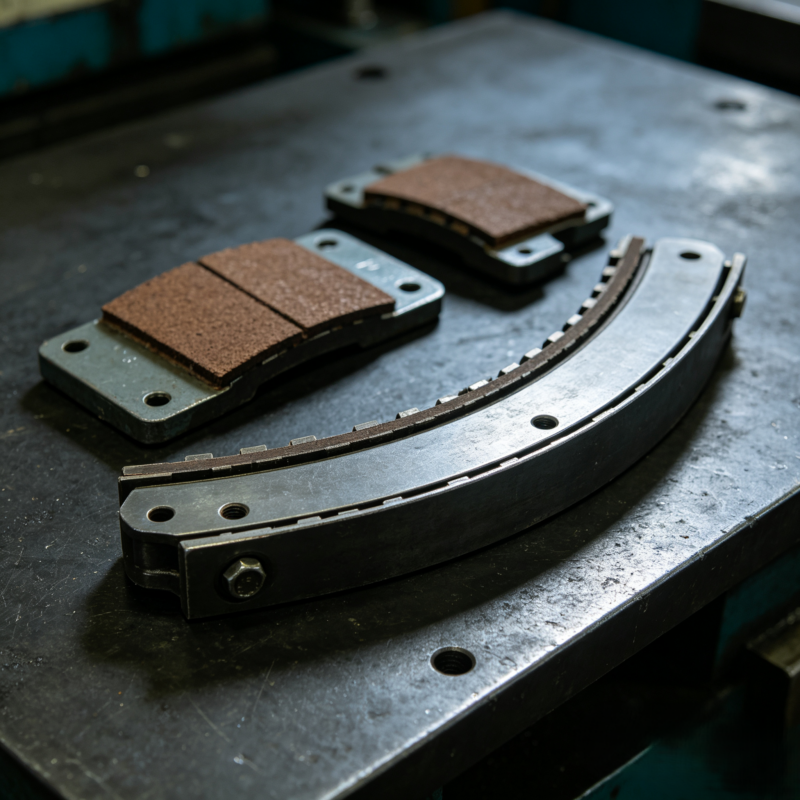
Temperature and wear resistance test: Sampling is conducted for high-frequency braking, high-temperature wear resistance, and pressure resistance tests to detect the friction loss rate and braking stability. Only after meeting the standards can batch shipments be made.
3. Production Process Characteristics of Brake Shoes (Hard Brake Accessories)
One-piece mold forming: The hoof plates are formed by pressing with a special mold. The overall structure is regular, the force is uniform, and there will be no local uneven wear.
Overall heat treatment: The finished hoof pieces undergo tempering and stabilization treatment to eliminate processing stress, making them less prone to deformation and cracking during long-term use.
Surface fine grinding treatment: The friction surface is precisely ground, with high flatness, large braking contact area, sensitive braking and no lag.
4. The Core Technological Gap Between High-Quality and Low-Quality Brake Belts
Molding density difference: High-quality products are formed under high pressure and high density, with a firm texture and wear resistance. Low-quality products are formed quickly under low pressure, have a loose texture, and are prone to rapid wear and powder shedding.
High-temperature resistance gap: The standard high-temperature sintering process can withstand high-temperature braking above 300℃. Low-priced products cure at low temperatures and are prone to softening, slipping and failure at high temperatures.
Bonding process gap: High-end products have deep bonding and are not prone to delamination; Small factories use simple adhesives, but peeling, delamination and cracking occur after 1-2 months of use.
Dimensional accuracy difference: The hole positions of the finely processed finished products are precise and the fit is tight. The dimensional deviation of the roughly processed parts is large, and after installation, the braking vibrates and is unstable.
5. Key Points to Avoid Pitfalls in Foreign Trade Procurement
Reject products without sintering process: Brake belts that are merely simply bonded and pressed have extremely poor heat resistance, and high-frequency stamping is highly likely to cause safety hazards.
Pay attention to the environmental protection standards of materials: Asbestos materials are prohibited in the markets of Europe, America, the Middle East and Southeast Asia. When purchasing, it is necessary to confirm the asbestos-free and environmentally friendly formula to avoid obstacles in customs clearance.
Be vigilant against low-density defective products: Brake belts that are relatively light in weight have insufficient density, and their wear resistance life is only one-third of that of genuine products, with extremely high after-sales costs.
Prioritize finely processed finished products: Rough-processed non-standard parts have poor compatibility and braking effect, and are not suitable for bulk export matching and long-term equipment maintenance.