
The clutch and brake are the core transmission components of the punch press. 90% of the problems such as brake air leakage, brake lag, high-temperature slippage and short service life of the equipment are caused by substandard production processes. This article provides a comprehensive explanation of the raw materials, production processes, technological differences, and key points to avoid pitfalls in foreign trade procurement of dry and wet clutches at the standard level.
1. Core Raw Materials for Press Clutch (The Root Cause of Quality Gap)
The housing and piston base: Made of HT300 high-grade ductile iron and 42CrMo alloy steel, it has strong impact resistance and is not prone to deformation or cracking after long-term stamping.
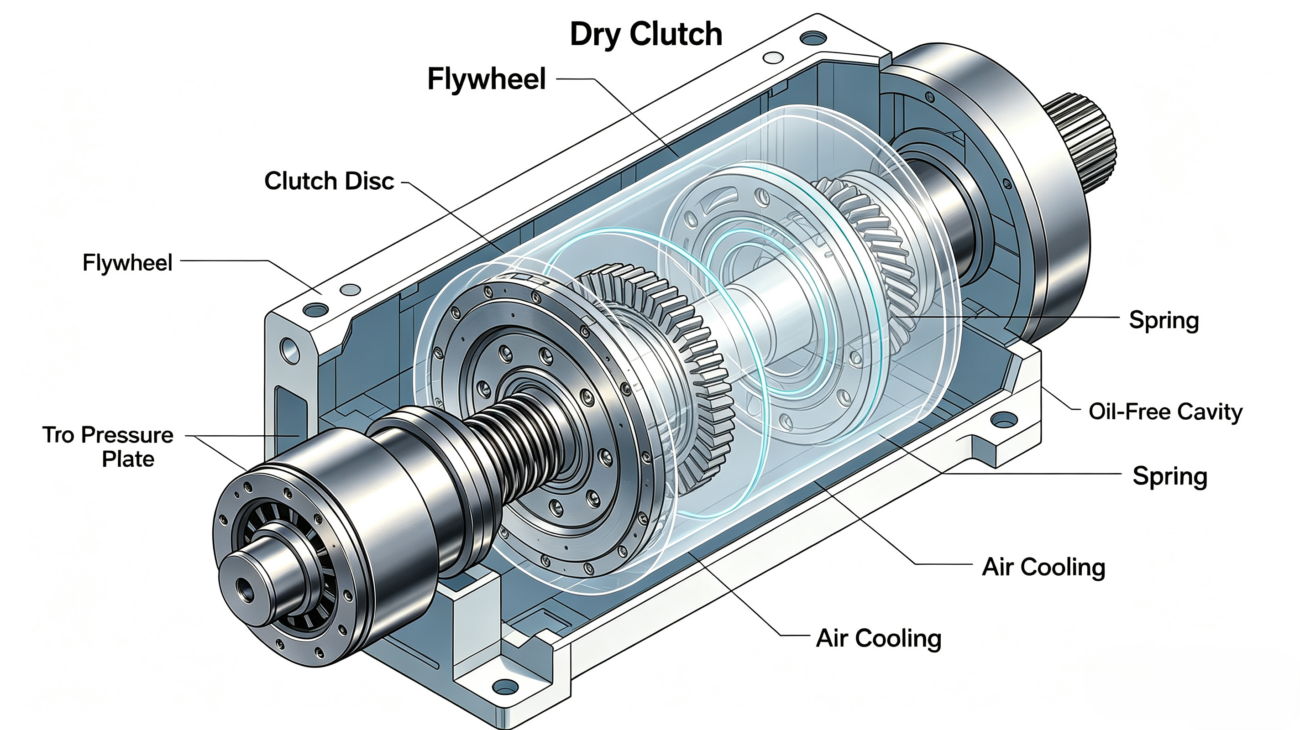
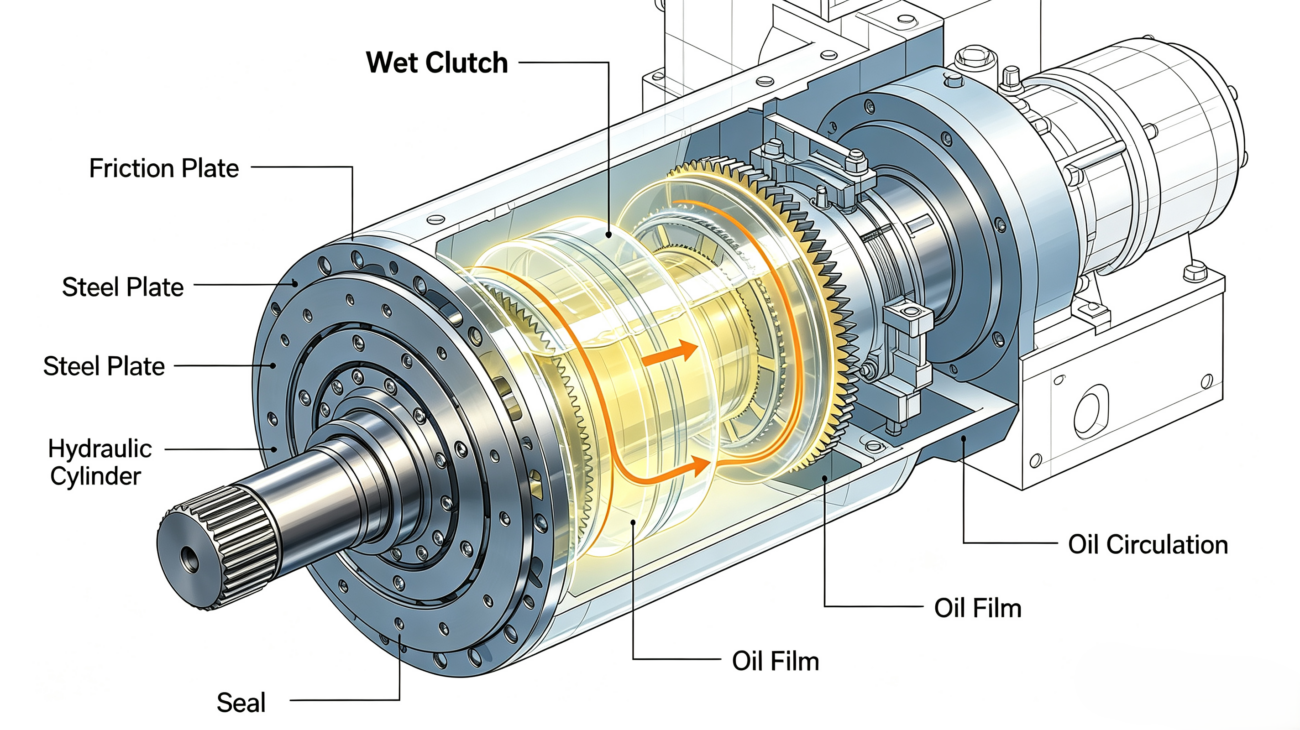
The core material of the friction: The dry clutch adopts copper-based powder metallurgy friction blocks, which are heat-resistant and have a stable friction coefficient. The wet clutch adopts oil-resistant paper-based friction plates, which are suitable for oil bath closed working environments.
Sealing system accessories: Equipped with fluororubber and nitrile rubber high-pressure oil seals, they are resistant to high temperatures and aging, effectively preventing air and oil leakage faults in the equipment.
Elastic and precision components: High-strength alloy springs and precision bearings are adopted to support the equipment for millions of high-frequency starts and stops, ensuring stronger operational stability.
2. Complete Production Process of Dry Clutch (Mainstream of General Mechanical Punch Presses.
Blank casting and aging treatment: The shell and piston are integrally cast and formed. After stress relief annealing process, the internal stress of casting is eliminated, fundamentally avoiding the problems of shell deformation and continuous air leakage in the later stage.
CNC precision machining: Through finish turning, Finish milling , and surface grinding, the flatness of the sealing surface and the accuracy of the air passage diameter are strictly controlled to ensure the fit and airtightness of the accessories.
High-temperature sintering of friction plates: Utilizing a special formula of copper powder, graphite, and wear-resistant additives, they are formed through high-pressure pressing and high-temperature sintering. Their wear resistance and high-temperature resistance far exceed those of ordinary pressed friction plates.
Component strengthening treatment: Quenching and blackening of the mating friction discs for rust prevention are carried out to enhance surface hardness and corrosion resistance, thereby extending the service life of the accessories.
Single-piece air tightness pre-test: Conduct individual pressure tests on pistons, sealing components and other accessories to screen out defective parts with poor sealing in advance.
Assembly and clearance calibration: Standardize the arrangement of springs and the embedding of friction blocks, precisely adjust the clutch and braking clearance to ensure sensitive braking response and stable start and stop.
Factory complete machine performance testing: High-frequency start-stop, torque calibration, and brake response speed testing are completed. Only after all parameters meet the standards can the goods be shipped.
3. Complete Production Process of Wet Clutch (Special for High-Speed/Precision/Hot Forging Punch Press)
Shell casting and stress relief treatment: High-precision casting blanks, combined with aging processes, to prevent shell deformation and micro-oil leakage under long-term high-pressure hydraulic conditions.
Specialized oil passage precision processing: High-gloss precision processing is carried out on the internal cooling oil passage to ensure smooth circulation of the hydraulic cooling oil, uniform heat dissipation and no heat accumulation.
Friction module stacking process: Friction plates and steel plates are alternately stacked and assembled. Multiple layers of components are precisely paired, ensuring uniform force distribution during operation and avoiding uneven wear and jamming.
Multi-layer oil-resistant sealing assembly: It adopts a superimposed sealing structure of multiple dedicated oil-resistant oil seals, which is suitable for high-pressure hydraulic environments and eliminates the risk of oil seepage and leakage.
Hydraulic pressure-holding sealing performance test: Long-term high-pressure pressure-holding detection to eliminate micro-leakage defects that cannot be identified by the naked eye and ensure sealing stability.
High-frequency durability simulation test: Simulate high-speed continuous stamping conditions and conduct long-term start-stop operation tests to verify the durability and stability of the equipment during high-frequency operation.
4. Differences in Dry and Wet Clutch Processes and Applicable Scenarios
Features of dry clutch: Natural heat dissipation by air, simple structure, controllable cost, suitable for small and medium-sized ordinary mechanical punch presses and intermittent stamping conditions.
Features of wet clutch: Oil bath forced cooling, high-temperature resistance, high-frequency fatigue resistance, suitable for high-speed precision punch presses, hot forging presses and other high-load equipment.
The difference in process difficulty: Wet clutches have extremely high requirements for oil passage accuracy, sealing systems, and oil compatibility of friction plates, and the production process threshold is much higher than that of dry clutches.
The difference in operational failure rates: Dry clutches produced by regular processes have almost no air leakage problems, while wet clutches are less prone to oil seepage and the friction plates will not fail due to high-temperature sintering.
5. Key Points to Avoid Pitfalls in Foreign Trade Procurement
Avoiding products without aging process: Small factories omit the annealing and aging process. The equipment is prone to shell deformation, brake leakage and brake failure after 3 to 6 months of use.
Avoid inferior friction materials: Recycled powder and low-temperature sintered friction plates are prone to slipping and rapid wear under high-temperature conditions, significantly reducing the service life of equipment.
Avoid pure assembly manufacturers: Products without independent CNC processing capabilities and assembled with purchased components have poor sealing surface accuracy and frequent air and oil leakage during long-term operation.
Configuration to avoid the shrinkage of wet seals: Replace special oil-resistant oil seals with ordinary oil seals. Due to the temperature difference during sea transportation and the high-pressure operation of equipment, oil leakage faults are very likely to occur.