
Many purchasing customers are puzzled: For punch presses of the same tonnage, the price difference can be several times. The core difference lies in the body structure and rigidity.The machine body is the basic framework of the press, bearing all the impact forces of stamping, and directly affecting the precision of parts, the service life of molds, and the long-term stability of equipment.Combining the three commonly used types of bodies in daily life – C-type open, H-type closed, and four-column type – this paper elaborates on the structural differences, advantages and disadvantages, as well as applicable scenarios.
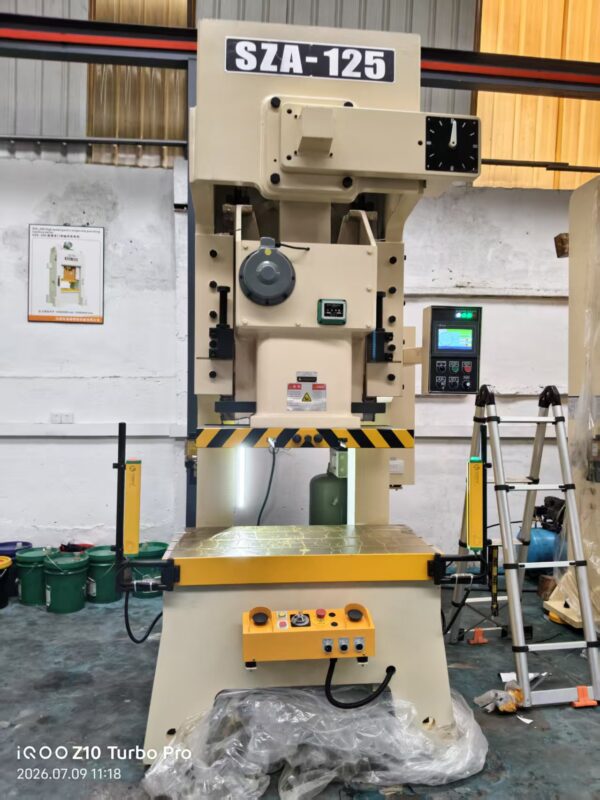
1. C-Type Open Body Press
The overall shape is in the form of a “C”, with three sides open for operation.
1.1. Structural Advantages
Convenient feeding, material removal and mold installation operations, small floor space and affordable price. It can be matched with automatic feeding machines and simple robot hands, and is suitable for processing small and medium-sized hardware parts.
1.2. Shortcomings
Unilateral force application, slight opening deformation of the machine body during heavy-load stamping, and prone to dimensional drift and increased burrs in products during long-term mass production. It is not suitable for ultra-high precision and thick plate deep drawing processes.
1.3. Applicable Models
Small mechanical punch presses, light servo punch presses; Gaskets, terminals, small brackets for household appliances, and small-batch sample production.
2. H-Type Closed Double-Column Body Press
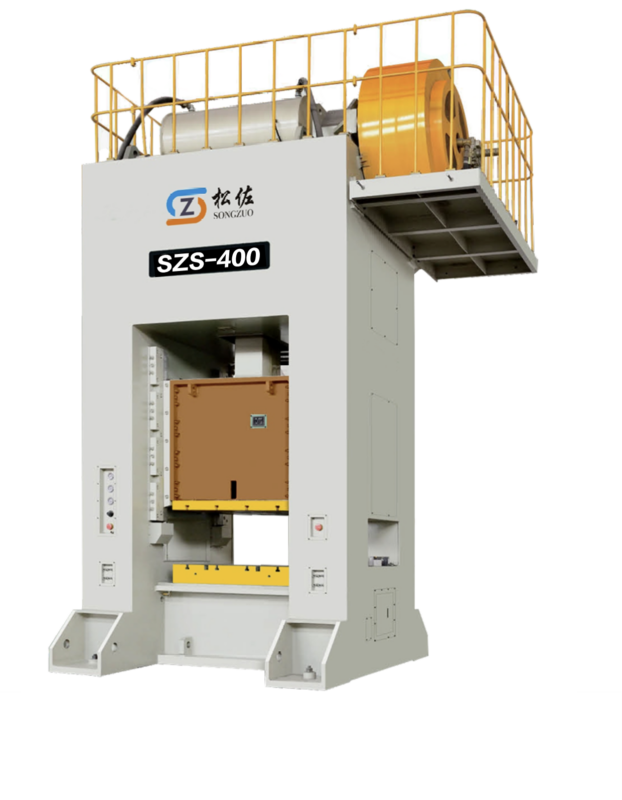
The two vertical columns on the left and right are connected to the upper and lower crossbeams, forming a completely enclosed frame.
2.1. Structural Advantages
Symmetrical force application, with the stamping impact force evenly distributed throughout the entire machine body, and its anti-deformation ability is far superior to that of C-type machines.
2.2. Shortcomings
Three sides are closed, the space for workpieces to enter and exit is limited, the loading and unloading operation of large-sized plates is not as convenient as that of C-type plates, and the manufacturing cost is higher.
2.3. Applicable models
Medium and large-sized mechanical punch presses, standard servo CNC punch presses; Automotive sheet metal, connectors, batch precision stamping parts.
3. Four-Column Closed Body Press
Four thick columns, in combination with the upper and lower thickened workbenches and the upper crossbeam, form a heavy-duty top-level structure.
3.1. Structural Advantages
Uniform pressure resistance at four points, full rigidity, and minimal deformation of the fuselage. It can withstand continuous pressure holding at an extremely large tonnage, and performs best in deep drawing, thick plate stamping, and shaping and embossing conditions. It is the first choice for high-end precision manufacturing.
3.2. Shortcomings
Large body volume, high self-weight, and the highest procurement and transportation costs. It is suitable for automated long-line production lines of coil materials.
3.3. Applicable models
Large-tonnage hydraulic punch presses, heavy-duty servo punch presses; Stainless steel deep-drawn shells, thick steel plate fittings, large structural components.
4. The Key Process for Enhancing the Rigidity of the Fuselage – Stress Relief
The body of the high-quality press is made of cast steel in one piece. After rough machining, it must undergo high-temperature stress relief annealing.
For the machine body that has not undergone stress relief, the long-term stamping vibration of the equipment will release the internal casting stress. After half a year to one year of use, the machine body will twist, the parallelism of the slider will shift, and the size of the parts will exceed the tolerance. After stress relief treatment, the dimensional stability of the machine body can be maintained for more than ten years, significantly reducing mold wear and defect rates.
5. Selection Reference Summary
5.1. C-type Open Punch Press
small sample making, limited budget and convenient operation.
5.2. H-Type Closed Double-Column Body Press
regular batch precision hardware, 3C products, and small and medium-sized automotive parts.
5.3. Four-Column Closed Body Press
Thick plate, deep drawing, large-tonnage continuous pressure holding, high-end mass production.
The rigidity of the machine body determines the upper limit of the equipment. Blindly purchasing low-rigidity punch presses at low prices will result in mold wear and the cost of reworking defective products in the later stage far exceeding the price difference of the purchase.