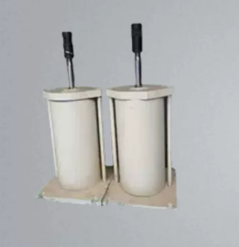
The balance cylinder serves as an indispensable core auxiliary component of mechanical punch presses. It primarily balances the dead weight of the slider, connecting rod and die to counteract downward gravitational force and buffer stamping inertia, effectively resolving common punch press issues including slider dropping, stamping vibration, frame shaking and heavy operating resistance. Cylinder leakage, gas cross-flow, piston rod jamming, pressure imbalance and buffer failure are frequent faults that lead to operational abnormal noise, precision deviation, die fracture and increased energy consumption. Many foreign trade purchasers merely focus on external overall dimensions while neglecting cylinder block machining accuracy, sealing structure design, buffering technology and assembly specifications, resulting in batch after-sales rework. This article systematically elaborates on the material selection, precision manufacturing processes, assembly technology, complete quality inspection standards and foreign trade procurement risk avoidance key points of punch press balance cylinders.
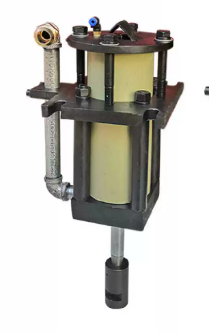
1. Selection of Core Raw Materials for Punch Press Balance Cylinders
Cylinder Block Material: High-strength aluminum alloy precision extruded profiles are the mainstream option. They feature light weight, high compressive strength, good deformation resistance and corrosion resistance. Anodizing treatment significantly enhances wear resistance, enabling the cylinder to withstand long-term high-frequency reciprocating motion and high-pressure air supply. It thoroughly avoids cylinder block cracking, deformation and air leakage.
Piston Rod Material: 40Cr / 42CrMo alloy steel is adopted. Subjected to quenching and tempering, precision mirror grinding and hard chrome plating, the piston rod features high surface hardness, superior surface finish, bending resistance, friction resistance and rust resistance, ensuring smooth reciprocating movement without jamming.
Piston Rod Material: 40Cr/42CrMo alloy steel is selected and subjected to quenching and tempering, precision mirror grinding and hard chrome plating. It delivers high surface hardness and excellent surface finish, with good resistance to bending, abrasion and rust, ensuring smooth reciprocating extension and retraction without jamming.
Buffering and Wear-Resistant Accessories: The cylinder is equipped with built-in wear-resistant PU buffer pads, high-toughness piston rings and guide wear strips. These components deliver superior shock absorption and noise reduction, mitigating rigid metal collisions and extending the overall service life of the cylinder.
2. Complete and Precision Production Process Flow of Balance Cylinders
Precision Machining of Cylinder Block: After fixed-length cutting of aluminum alloy profiles, deep hole boring and inner wall precision grinding are performed. Strict control over the cylinder barrel’s roundness, cylindricity and inner wall surface finish ensures jamming-free piston movement and consistent air tightness.
Piston Rod Hardening and Fine Grinding: After quenching and tempering of alloy steel rods, multi-layer hard chrome plating and mirror polishing are performed to remove surface burrs and fine micro-scratches. This prevents damage to sealing components and eliminates air leakage at the source.
Port and Base Precision Machining: CNC precision milling is applied to the cylinder front and rear covers as well as the mounting base. It ensures accurate hole positioning and flat end faces, achieving tight assembly fit and uniform force distribution, and preventing abnormal operating noise caused by mounting deviation.
Surface Anodizing Treatment: The entire cylinder block undergoes hard anodizing to thicken the protective oxide film. This significantly improves corrosion resistance, scratch resistance and anti-aging performance, enabling the cylinder to adapt to complex industrial working conditions and long-term marine storage and transportation.
Dust-Free Precision Assembly: Seals, pistons, guide strips, buffer components and piston rods are assembled layer by layer in a dust-free workstation. Strict control of assembly clearance prevents jamming and air leakage induced by residual impurities.
Precise Buffer Adjustment: For punch presses of varying tonnages, the built-in buffer stroke and buffer force are precisely calibrated. This realizes flexible buffering during slider descent and smooth reset during ascent, reducing vibration and noise while protecting the machine frame and dies.
3. Complete Factory Inspection Procedures for Air Tightness and Overall Performance
High-Pressure Holding Air Tightness Test: The test is fully performed under rated working pressure with long-term pressure stabilization monitoring. Products are qualified only when the cylinder block, air ports and piston rods show zero air leakage, zero pressure relief and zero gas cross-flow.
Full-Stroke Reciprocating Test: Simulating high-frequency press operating conditions, the full-stroke reciprocating extension and retraction test eliminates hidden defects including jamming, vibration, abnormal noise and insufficient stroke.
Buffering Performance Test: It verifies the smoothness of buffer start and stop to avoid hard impact, rebound and end shaking, ensuring stable stamping operation.
High and Low Temperature Weather Resistance Test: This test simulates temperature variation and humid environments encountered during marine transportation to assess the aging resistance and weather resistance of sealing components, preventing premature failure during overseas application.
Finished Product Parameter Recording and Full Inspection: Every cylinder undergoes independent inspection, with pressure parameters, stroke parameters and buffer data documented separately. This enables complete quality traceability for foreign trade orders and supports customers’ quality inspection verification.
4. Core Technological Gaps Between High-Quality and Low-Quality Balance Cylinders
Cylinder Block Precision Gap: Genuine products feature mirror-polished inner walls with accurate roundness, enabling ultra-smooth piston operation. In contrast, crudely machined cylinder blocks have rough inner walls and severe roundness deviation, which easily wears sealing components and causes rapid air leakage.
Sealing Durability Gap: Premium cylinders adopt a multi-layer combined sealing structure with high and low temperature resistance, supporting long-term pressure holding without air leakage. Low-cost simplified seals are prone to aging, deformation and hardening, leading to pressure relief and functional failure after short-term operation.
Piston Rod Process Gap: Hard-chromed and precision-ground piston rods deliver excellent wear resistance, scratch resistance and structural stability without deformation. Ordinary polished rods with no hardening or electroplating treatment are susceptible to rust and surface coarsening, which scratches sealing rings and triggers gas leakage.
Buffering Performance Gap: The precisely adjustable buffer structure provides stable shock absorption for effective equipment protection. Cylinders lacking reliable buffering generate frequent rigid metal collisions, causing severe machine vibration and accelerated mold wear.
5. Key Pitfall Avoidance Points for Foreign Trade Procurement
Beware of Non-standard Rough Machined Cylinders:Low-priced products with unground inner walls and unelectroplated piston rods have an extremely high leakage rate and a huge risk of overseas after-sales returns and exchanges.
Reject Ordinary Rubber Sealing Configurations: Ordinary rubber is not resistant to aging or temperature differences and is prone to hardening and failure after sea transportation. Fluorine rubber and high-end weather-resistant sealing parts must be selected.
Choose the Precise Buffering Process: Cylinders without buffering or with failed buffering will cause excessive impact and vibration of the press, affecting the stamping accuracy and shortening the service life of the equipment.
Precise Selection Based on Tonnage: Different tonnages of punch presses correspond to dedicated balance cylinders with specific stroke and pressure specifications. Non-standard adaptation may lead to problems such as insufficient balance, slider drop, and pressure overload.