
In tropical sheet metal stamping workshops in India and Egypt, short service life, abnormal wear and frequent replacement of brake belts are common problems for the vast majority of processing plants. Many factories simply attribute the issue to the quality of the accessories and keep replacing the low-priced belts. However, the problems still occur within two or three months, such as wearing out, slipping, and burning the belts, resulting in high accessory costs, frequent shutdowns, and unstable production capacity. In fact, the rapid wear of brake belts is only partly due to the material, but more often stems from five hidden issues: gap adjustment, pneumatic timing, dust and oil stains, mismatched working conditions, and mechanical jamming. This article, in light of the real working conditions in South Asia and North Africa, which are characterized by high temperatures, much dust and a large number of old equipment, comprehensively dissects the root causes of wear and tear, and provides standardized solutions for troubleshooting, debugging, maintenance and selection, to thoroughly solve the problem of rapid wear of brake belts.
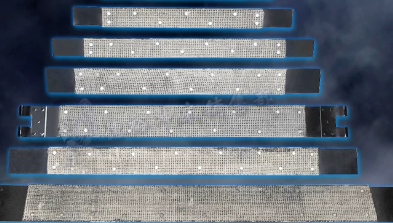
1. The brake clearance adjustment is not standardized, resulting in continuous wear from high-temperature dragging friction.
The brake clearance is the core parameter determining the service life of the brake belt, and it is also the most error-prone adjustment procedure on site. Many operators perform adjustments purely based on experience without calibrating against the standard stroke specified for each model. Excessively small clearance causes the brake belt to lightly contact the brake wheel during the slider’s idle stroke, return stroke and standby state, generating continuous micro-friction. This effect is mild under typical temperate working conditions. However, summer workshop temperatures in India and Egypt reach extremely high levels. Thermal expansion of the machine frame and brake wheels further reduces the originally acceptable clearance, bringing about persistent dragging friction and gradual wear accumulation day and night.
Asymmetric left-right clearance constitutes the primary cause of unilateral eccentric wear and premature scrapping. Undersized clearance on one side concentrates the frictional load locally, leading to unilateral blackening, carbonization and thinning, which renders the entire brake belt unusable. Excessive clearance results in insufficient braking stroke and inadequate braking force. Operators are then compelled to raise air pressure for compensation, which aggravates braking impact and causes rapid peeling of the friction layer.
Standardized Solution: Calibrate the left and right brake clearances uniformly under cold static machine conditions to achieve symmetrical stroke and even force distribution. During hot tropical seasons, reserve proper allowance for thermal expansion to prevent hot-state dragging friction. Conduct regular re-measurement and fine-tuning every two weeks to counteract parameter drift induced by machine vibration, so as to reduce invalid friction loss fundamentally.
2. Disordered Timing of the Pneumatic Valve Group Leading to Mutual Offset Wear between Clutch and Brake
The clutch and brake of the punch press depend on precise timing switching via the pneumatic dual valve. Pneumatic circuit faults represent the most concealed and easily overlooked cause of wear. In dusty workshops, dust and iron filings block the valve body exhaust ports, slowing exhaust and delaying clutch disengagement. This creates an overlapping condition: the brake has not fully released while the clutch is already engaged. Hard friction occurs during every start-stop cycle of stamping, leading to severe accumulated wear over time.
Aging cylinder seals and leaking rubber cups, coupled with unstable air supply pressure, may lead to insufficient brake release. The brake belt remains in a semi-engaged state for an extended period and cannot fully separate from the brake wheel. Furthermore, power grid voltage fluctuates drastically in India and Egypt, resulting in unstable air compressor pressure. The braking force alternates between strong and weak, subjecting friction surfaces to repeated impact loads. This accelerates component fatigue, powder fallout and surface peeling of the brake belt.
Rectification Plan: Clean dust from the pneumatic dual valve daily and drain accumulated water and oil contaminants from the air pipeline weekly to ensure unobstructed exhaust. Regularly replace aging cylinder seals and filter elements. Equip the system with a pressure stabilization device to stabilize operating pressure, guarantee precise timing switching between the clutch and brake, and avoid abnormal wear caused by asynchronous actions.
3. Adhesion of Dust and Oil Contaminants on Friction Surfaces Triggers Severe Abrasive Wear
Tropical stamping workshops feature arid, low-rainfall conditions and heavy dust loads. Iron filings and metallic micropowder generated during sheet metal stamping readily drift into the clutch-brake assembly and adhere to the friction interfaces between the brake wheel and brake belt. These hard metallic particles act as abrasive grit. Every braking cycle creates intense grinding action against the friction material, cutting the normal service life by more than half. This constitutes a key contributor to excessive wear observed at aging processing plants.
Apart from abrasive wear induced by metallic dust, oil contamination adhering to friction surfaces serves as another major hidden cause of premature wear. Oil circuit leakage, bearing oil seepage and oil dripping from overloaded pumps continuously introduce oil stains onto the contact interface between the brake belt and brake wheel. Oil contaminants drastically lower the friction coefficient, directly triggering brake slippage, insufficient braking force and positioning inaccuracy. To avoid production downtime, field operators typically raise the brake air pressure manually to enforce braking. Under high-pressure friction, the brake belt surface heats up rapidly, undergoes carbonization and delamination, and the wear rate multiplies sharply. The belt will be scrapped quickly and brake failure occurs within a short timeframe.
Targeting dust and oil contamination, feasible on-site protective measures for workshops are specified as follows: Repair damaged dust shields around the clutch assembly to reduce open dust ingress. Upon daily shutdown, thoroughly blow off friction surfaces, valve body clearances and brake wheel grooves using dry compressed air to avoid dust accumulation and agglomeration. Promptly rectify oil leakage and seepage faults of the equipment. Operation under oily or faulty conditions is prohibited. Maintain a clean and dry brake friction zone to fundamentally eliminate abrasive wear and slippage wear induced by oil contaminants.
4. Mismatched Brake Belt Material for Operating Conditions: High-temperature thermal aging triggers premature scrapping of brake belts.
Most factories hold the misconception of unified procurement and mixed use of accessories without differentiating working conditions. Economical general brake belts are adopted indiscriminately for all scenarios, including continuous mass production, high-frequency inching, thick-plate heavy-load stamping and regular small-part manufacturing, resulting in severely inadequate material compatibility. Tropical high-temperature workshops suffer poor heat dissipation and elevated ambient temperatures. Conventional low-density brake belts possess a low heat resistance threshold and loose structure. Under cyclic start-stop and high-frequency friction conditions, heat accumulates persistently without effective dissipation. This readily causes thermal softening, thermal aging, carbonization and friction layer delamination of the material, bringing about rapid wear, slippage and functional failure of the brake belt.
Heavy-duty thick-plate stamping imposes higher requirements on the impact resistance and pressure resistance of brake belts. Ordinary thin economical brake belts cannot endure heavy-load braking impact and tend to suffer surface delamination, chipping and edge fracture, leading to complete scrapping after short service. Many factories blindly purchase low-priced, non-vulcanized, low-quality bulk brake belts. Their substandard material density and insufficient heat resistance make them wholly incompatible with the harsh mass-production conditions in India and Egypt. Frequent replacements fail to resolve the fundamental wear issue.
Precise selection and adaptation plan: For high-temperature, dusty workshops with high-frequency continuous mass production, priority shall be given to high-pressure vulcanized, high-density, heat-resistant reinforced brake belts that deliver superior resistance to thermal aging, abrasion and impact. For thick-plate heavy-duty stamping conditions, all conventional belts shall be uniformly replaced with thickened, wear-resistant dedicated models. For intermittent small-batch and low-frequency production scenarios, standard economical brake belts are applicable. Accurate material matching according to actual working conditions can directly double the service life of brake belts.
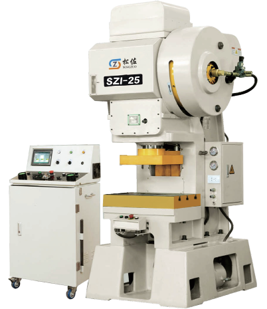
5. Mechanical structure jamming and aging: Poor reset performance aggravates hidden wear of friction components.
Many workshops pay close attention to vulnerable components such as brake belts and pneumatic valves, yet overlook hidden wear triggered by jamming and aging within the braking mechanical structure. This ranks among the core causes explaining why newly replaced brake belts exhibit shortened service life. Long-term high-frequency stamping of the press, cumulative equipment vibration, together with erosion from dusty and humid tropical environments, readily lead to dust accumulation, rust formation, dry friction and jamming on brake swing rods, pin shafts and rotating shaft sleeves. These defects raise brake reset resistance and bring about incomplete rebound. Even when air circuit and clearance parameters remain normal, the brake belt still maintains slight long-term contact with the brake wheel and induces continuous hidden wear, which eventually develops into extensive abnormal wear.
The brake reset spring is a frequently-overlooked key component. Subjected to long-term high-temperature operating conditions and high-frequency stretching-compression impacts, it may suffer elasticity attenuation, metal fatigue, slight deformation and skewing. Insufficient spring tension directly results in incomplete brake disengagement and inadequate reset, leaving the equipment in a semi=braking state during operation. This not only wears down the brake belt, but also triggers a chain of secondary problems including increased equipment load, excessive temperature rise, and jerking during start-stop cycles.
In addition, loss of roundness, surface grooves and uneven wear on the brake wheel also constitute important causes of local uneven wear. When the friction surface of the brake wheel is irregular, uneven force acts on the brake belt during contact. High pressure concentrates on partial regions, resulting in rapid blackening, carbonization, thinning, peeling and damage of friction materials. For aging equipment without long term structural maintenance, increased clearances appear on connecting rods, swing rods and pin shafts, bringing about loose movement and offset braking trajectories, which further aggravate eccentric load wear of friction pairs.
Targeted structural maintenance and rectification plan: Regularly apply high-temperature resistant grease to the brake swing rods, pin shafts and all movable friction points to eliminate rust and maintain effective lubrication. This ensures smooth, jam-free braking movement and complete reset performance. The condition of brake reset springs shall be inspected periodically. Any spring with relaxation, deformation or insufficient elasticity shall be replaced immediately to guarantee adequate reset tension. For brake wheels with surface grooving, out-of-roundness and uneven wear, precision grinding and trimming shall be conducted regularly to restore flat and uniform friction surfaces. In addition, check and calibrate the clearances of connecting rods, swing rods and pin pairs, eliminate loose clearance and offset braking trajectories, and fundamentally reduce eccentric load wear of friction pairs.