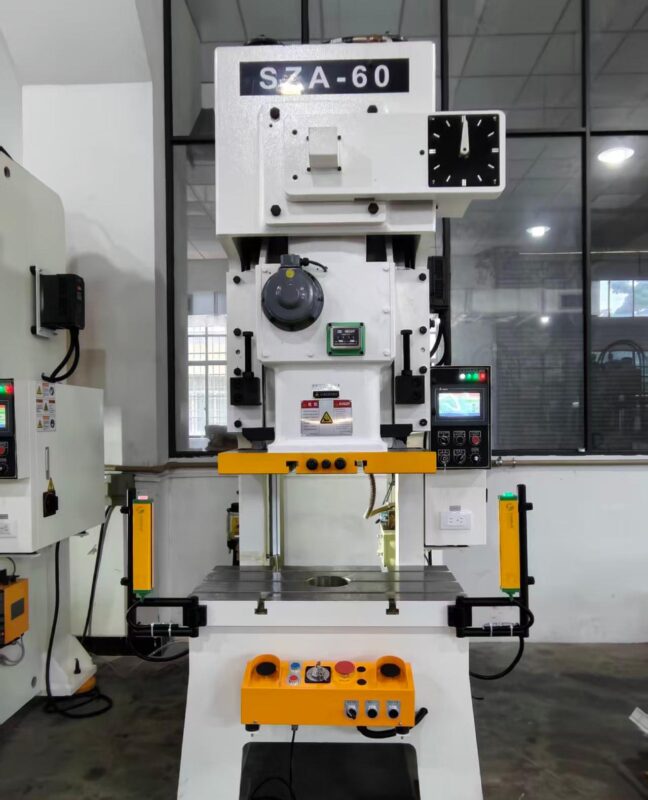
The safety double valve is a core safety protection pneumatic component of mechanical punch presses and is also a mandatory safety accessory for overseas orders from Europe, America, Russia and Southeast Asia. It can instantly cut off the pneumatic power when there is a single valve failure, air leakage or jamming, eliminating safety accidents such as false punching, continuous punching and slider falling of the press. The lack of safety interlock functions between ordinary single valves and inferior double valves on the market is the core reason for safety accidents in overseas factories, failure to meet customs certification standards, and customer returns. This article elaborates on the raw materials, production processes, precision processing procedures and the complete set of quality inspection standards of the safety double valve for punch presses.
1. Core Raw Materials for the Safety Double Valve of the Punch Press (Safety Performance Foundation
The main body material of the valve body: It is made of high-precision aluminum alloy die-casting, which is lightweight, has high compressive strength, is not prone to oxidation and rust, and is suitable for long-term high-pressure pneumatic working conditions. At the same time, it has excellent heat dissipation and anti-deformation capabilities.
Valve core precision components: Made of stainless steel wear-resistant material and hardened, it is resistant to high-frequency reciprocating friction, does not jam the valve, and is not prone to wear, ensuring precise and stable start-stop actions for millions of times.
Sealing gasket assembly: Made of fluororubber material that is resistant to high and low temperatures and aging, it has excellent air tightness and can adapt to the temperature difference in sea transportation, the humidity in workshops, and high-pressure ventilation environments, eliminating the problems of micro-leakage and slow pressure relief.
Electromagnetic coil material: The coil is wound with pure copper enameled wire, which features stable conductivity, low heat generation, strong suction force, and will not burn out even when powered on for a long time. It is suitable for continuous industrial stamping operations.
2. The Complete Production Process Flow of Safety Double Valves
Precision die-casting of the valve body: The valve body is formed in one piece by high-pressure die-casting process, ensuring a dense cavity structure without sand holes or gas holes, eliminating the risk of high-pressure gas leakage from the source, which is different from the ordinary cast inferior valve body.
CNC precision machining of the cavity: High-precision turning and milling are carried out on the inner cavity of the valve body, the air passage, and the installation hole positions. The flatness and coaxiality of the air passage are strictly controlled to ensure smooth sliding of the valve core without jamming and uniform ventilation.
Deburring and Passivation treatment: All inner cavity corners and airway interfaces are finely deburred and passivated to prevent valve jamming and pressure relief failure caused by residual impurities, ensuring the internal cleanliness of the valve body.
Hard anodizing treatment: The surface of the valve body undergoes anodizing hardening treatment to enhance its corrosion resistance, wear resistance and oxidation resistance, making it suitable for complex industrial working conditions and long-distance Marine storage environments.
Precision assembly of valve core and sealing parts: Utilizing dust-free precision assembly technology, the double valve groups are symmetrically assembled. The synchronization degree of the two valves is strictly controlled to ensure the core safety functions of double interlocking and synchronous on-off.
Precise matching of electromagnetic coils: Match the rated voltage coils, test the energized suction force and response speed, ensuring sensitive instantaneous on-off, no delay, and no weak attraction issues.
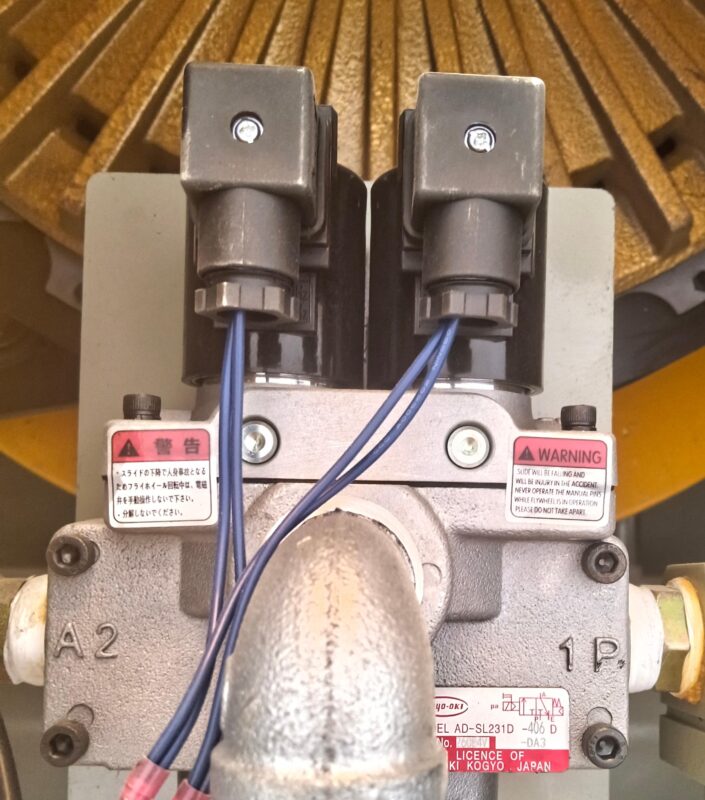
3. Exclusive Quality Inspection Procedures for Safety Double Valves (Core Standards of Regular Factories)
High-pressure air tightness test: A full-process high-pressure pressure-holding test is conducted to detect minor air leakage issues in the valve body, interfaces, and sealing parts. Only when there is no pressure relief or leakage during pressure-holding can it be considered qualified.
Dual-valve synchronization detection: Test the on-off synchronization rate of the two sets of valve bodies to ensure that the other valve can be instantly locked when a single valve fails, achieving true safety interlock protection.
High-frequency Fatigue life test: Simulate the million-cycle high-frequency start-stop conditions of a punch press, conduct continuous on-off tests, and verify the wear resistance of the valve core, the stability of the coil, and the overall durability.
High and low temperature environment test: Simulate the high, low and humid conditions of sea transportation to test the weather resistance of seals and coils and prevent malfunctions when used overseas.
Full inspection and sorting of finished products: Each finished product is individually numbered for inspection, with pressure parameters, response time, and synchronized data recorded to prevent defective products from leaving and meet the traceability requirements of foreign trade.

4. The Core Gap Between High-Quality Double Valves and Inferior Products
Safety structure gap: Genuine products are equipped with double-valve interlocking and self-locking functions in case of faults. Poor-quality double valves are merely simple parallel connections of two valves and lack safety locking functions, thus failing to pass safety certifications in Europe and America.
Processing accuracy gap: High-precision inner cavity processing, zero jamming of valve core sliding; The rough machining of the valve body’s air passage is uneven, which is prone to dust accumulation and valve jamming, causing the continuous punching of the press to lose control.
Material durability gap: Genuine stainless steel valve core + fluorine rubber sealing, with an extremely long service life; Poor-quality iron valve cores and ordinary rubber seals frequently cause short-term wear, air leakage and failure.
Electrical stability gap: Pure copper coils have low heat generation and do not burn out the machine. Poor-quality copper-clad aluminum coils tend to heat up severely after long-term operation, which can easily burn out, malfunction and cause safety accidents.
5.Key Points to Avoid Pitfalls in Foreign Trade Procurement
Beware of fake double valves: Low-priced products on the market only have a double appearance and no interlock protection mechanism. They cannot meet CE and MD mechanical safety directives and are prone to customs clearance failure and customer complaints.
Reject products without inspection reports: Regular export-grade double valves can provide factory inspection data and life test reports. “Three-no” products have no quality traceability and the after-sales risk is extremely high.
Priority weather-resistant materials: For export products, fluorine rubber seals, pure copper coils, and stainless steel valve cores must be selected to adapt to the temperature differences in cross-border sea transportation and the complex workshop conditions in various countries.
Verify parameter compatibility: Different tonnages of punch presses are suitable for different pressure and diameter parameters. Non-standard compatibility is prone to problems such as insufficient ventilation, braking lag, and protection failure.