
Brake belts (friction belts) are the core friction consumables of the clutch braking system in mechanical punch presses. They are high-frequency wear and tear components that directly determine the start-stop accuracy, braking stability, and production safety of the equipment. Unlike ordinary conveyor belts, the brake belt of a punch press is subject to extreme working conditions such as high-frequency instantaneous impact, high-temperature dry friction, repeated start-stop, and high-pressure contact for a long time. It is the core guarantee for controlling the inertia of the slider, achieving precise inching, emergency stop locking, and eliminating overtravel in the punch press.
The common batch problems of punch presses on the market, such as brake slippage, delayed stop, deviation of the fixed point, large inertia of the die head, inability to stop at high temperatures, malfunction in humid weather, shaking during start and stop, and powder dropping and cracking, are 90% caused by insufficient material grade of the brake belt, loose pressing density, poor high-temperature resistance, simple bonding process, and substandard laying accuracy. In the export of foreign trade equipment, low-end ordinary belts are frequently used accessories for overseas after-sales complaints, rework and replacement, and failure to pass security checks. This article provides a comprehensive disassembly of the material system, production process, underlying failure logic, superiority and inferiority differences, foreign trade procurement standards, and usage and maintenance plans for brake belts specifically designed for punch presses.
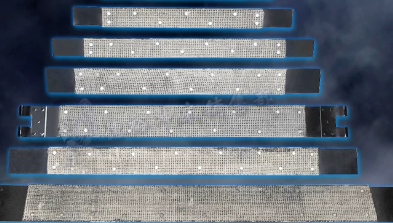
1. The Core Functions and Harsh Working Conditions of the Brake Belt for Punch Presses
Precise braking and locking: In coordination with the clutch assembly, it achieves rapid braking and instantaneous locking of the slider, significantly eliminating mechanical inertia, ensuring precise single stamping, inching fine-tuning, and mold alignment, and preventing overtravel and misalignment.
High-frequency wear-resistant and durable: Compatible with continuous high-frequency stamping by punch presses, it does not soften, deteriorate or slip due to continuous friction, maintaining long-term braking consistency and reducing the cost of frequent replacement.
High-temperature anti-aging and stability: Due to continuous friction and temperature rise during stamping, high-quality brake belts can maintain a stable coefficient of friction under high-temperature working conditions, without issues such as thermal aging failure, coasting drift, or inaccurate shutdown.
Buffering, shock absorption and noise reduction: The high-quality composite fiber material has moderate toughness, which can weaken rigid impacts, alleviate the shaking of the machine body during startup and shutdown, reduce equipment noise, and improve the smoothness of the entire machine’s operation.
2. Materials and Production Processes of High-End Export-Grade Brake Belts
Environmentally friendly composite fiber base material: It adopts a high-temperature resistant mineral fiber + glass fiber composite ratio, with an asbestos-free and environmentally friendly formula. It features high overall toughness, tensile resistance, and is not prone to delamination or breakage. It is suitable for the high-frequency and heavy-load impact working conditions of heavy-duty punch presses.
High-stability friction coating: The surface is attached with modified wear-resistant friction material, featuring a high and uniform friction coefficient with minimal difference between dry and wet states. It completely resolves issues such as slipping in humid weather, softening failure at high temperatures, and abnormal noise due to excessive hardness at low temperatures.
High-temperature and high-pressure vulcanization and shaping: Utilizing industrial-grade high-temperature vulcanization, high-pressure dense pressing, and constant-temperature aging and shaping processes, the internal structure of the belt is dense without pores, hollowing, powder shedding, or delamination, effectively eliminating the common short-life problem of loose belts from the root.
Penetrating one-piece bonding: The bottom layer adopts a hot-pressing penetrating bonding process, with the adhesive layer penetrating into the interior of the fibers instead of the surface layer being covered. It is resistant to high temperatures without delamination, does not delaminate when heated, and does not crack or peel off after long-term friction.
Precision cutting and edge grinding: The finished products are uniformly and precisely cut, with smooth edge grinding, uniform width, no burrs, no deformation, high assembly fit, uniform braking force, no uneven grinding, and no jamming.
3. Common Failure Principles and Root Causes of Brake Belts
High-temperature thermal degradation and slippage: Low-end materials have a low heat resistance temperature. After continuous stamping and heating, the material softens, and the friction coefficient drops sharply, resulting in inability to stop, sliding over the range, and drifting when the machine stops.
High-temperature heat attenuation and slippage: Low-end materials have a low heat resistance temperature. After continuous stamping and heating, the material softens, and the friction coefficient drops sharply, resulting in inability to stop, sliding over the range, and drifting when the machine stops.
Malfunction due to moisture and lack of power in rainy weather: Ordinary fiber materials are highly prone to absorbing water and moisture, causing the surface to slip and spin idly. They fail to start up in the early morning or brake in humid weather, which is a common fault in rainy areas overseas.
Loose powder shedding and rapid wear: Without high-pressure densification process, the internal pores are numerous and the structure is loose. High-speed friction causes continuous powder shedding and rapid thinning, resulting in short-term precision failure.
Delamination cracking, peeling and de-gluing: Low-temperature veneering process, no vulcanization setting. After the equipment heats up, the adhesive layer fails and the skin layer separates, resulting in edge lifting, cracking, breakage and shutdown.
The material is too hard, and there is abnormal vibration and noise: The low-quality formula fibers have excessive rigidity and no buffering toughness. When starting and stopping, the rigid impact on the machine body causes large vibration, high noise, and unstable positioning.
4. The Core Gap Between High-Quality Industrial-Grade and Low-Quality Ordinary Belts
Density difference: High-quality high-pressure dense molding, thick and heavy, compact structure, no hollowing. Poor-quality belts are loose and porous, relatively light in weight, prone to heat absorption, wear and tear, and deformation.
High-temperature resistance gap: Industrial grade can withstand continuous high temperatures without softening or thermal aging. Ordinary belts will show obvious slippage and braking failure when the temperature exceeds 80℃.
Bonding process gap: High-quality penetration one-piece vulcanization, no delamination permanently; Poor-quality surface veneer delaminates, peels and becomes unusable when exposed to heat.
Bonding process gap: High-quality penetration one-piece vulcanization, no delamination permanently; Poor-quality surface veneer delaminates, peels and becomes unusable when exposed to heat.
Environmental stability gap: High-quality dry and wet universal, moisture-proof and heat-resistant, stable throughout the four seasons; Poor quality is greatly affected by temperature and humidity. Weather changes directly impact braking accuracy.
Service life gap: The service life of regular export-grade belts is 2 to 3 times that of ordinary low-priced belts, with an extremely low return rate, making them suitable for long-term mass production conditions overseas.
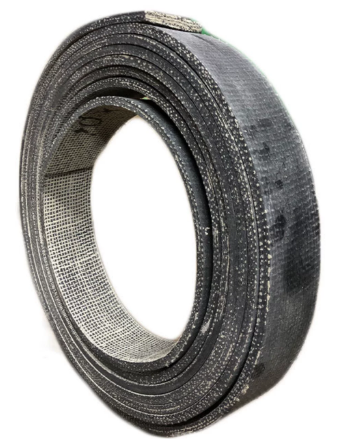
5. Core Standards for Avoiding Pitfalls in Foreign Trade Procurement of Brake Belts
Ordinary drive belts are strictly prohibited from being used as substitutes: Ordinary conveyor belts lack high-temperature resistance and anti-friction formulas. They can only convey but not brake. When used in punch presses, they are highly likely to cause safety accidents.
Choose the high-pressure vulcanization densification type: Simple assembly belts without high-pressure pressing and constant temperature setting will definitely lose powder, delaminate and slip in the short term, and cannot be used for export equipment.
Priority dry and wet dual-stable material: Suitable for complex overseas working conditions such as high temperature, heavy rain and humidity, it eliminates the influence of climate on braking performance and ensures the stability of the equipment throughout the year.
Verified density and craftsmanship: High-quality belts are thick, flexible, with a dense cut surface, regular cutting, no loose holes, and strong batch consistency.
Precise matching by tonnage: Small tonnage is suitable for flexible and quiet models, while large tonnage is suitable for dense and impact-resistant models. Do not mix different specifications to avoid insufficient braking or excessive wear.
6. Key Points for Daily Maintenance and Life Extension Usag
Long-term continuous overloading stamping is prohibited to prevent the belt from accumulating high temperatures continuously and accelerating the aging and thermal attenuation of the material.
Regularly clean the dust and oil stains on the surface of the belt. The adhesion of oil stains will directly lead to friction failure, slippage and idling.
During the running-in period of the new machine, run it at a low speed to ensure uniform adhesion and running-in of the friction surfaces, thereby enhancing the stability and accuracy of braking in the later stage.
Slight slippage should be checked and adjusted in time to avoid long-term semi-friction dry burning and prevent the belt from being carbonized due to high temperature and permanently failing.